
On July 17, 2014, Malaysian Airline flight MH-17 was shot down over Eastern Ukraine by a BUK surface-to-air missile killing all 298 passengers including 6 of the world’s top AID’s researchers and scientists. The weapon originated from a Russian missile system, belonging to the Russian Armed Forces.
These are the facts…unless you work for the Kremlin.
In the days following the disaster, the Russian government peddled multiple, conflicting, alternative theories for the crash.
“MH-17 was shot down by a Ukrainian jet.”
“MH-17 was blown up by a missile intended for the Russian President’s plane.”
“MH-17 was already full of dead bodies and deliberately crashed as part of a Western conspiracy to frame Russia.”
“Yes, it was shot down by a BUK missile but not one of Russia’s.”
Days after the crash, Putin and his team built out short-term, serviceable backstories for each of the alternative theories. They used media outlets and various mid-level government and party intermediaries to launder their stories through the information ecosystem. And then they flooded the airwaves and clogged up the news-cycles with these alternate realities.
This multiple-narrative diversion technique is not the product of hurried and disorganized government response. It is a highly effective disinformation strategy. Employed not necessarily to convince its audience of a particular version of events (although if that happens, all the better) but to fatigue them. To back their citizens into a position of skeptical indifference. “Well, there is no such thing as truth, to begin with.” “There are so many versions, who’s to say which story is wrong or right.” “What is truth anyway?” “It’s all just your interpretation.”
The goal here is to exhaust the press’s resources and time by ushering out as many plausible dead-end stories as possible. Journalists are then forced to wage an education battle with the public, spending valuable time and resources convincing citizens that their government is lying. The government, meanwhile, quickly moves on to strafing and smoke-screening the next news story and the process repeats itself. This diversion technique is all in service of a singular goal; to lull the public into tuning out, exhausted by it all. “Yea yea, we know the government lies, all governments do. So what?” A slow drip of weaponized nihilism.
These techniques are not necessarily new. They have been part of the “disinformation” playbook since the Cold War. What is unique about today’s information warfare, however, is the battlefield where it all plays out. Twitter and Facebook now occupy the arenas in which fake news and disinformation get filtered out to the mainstream media outlets.
 All of this may seem a bit obvious to those who have been following the news events of the last five years, but its philosophical implications are easy to miss. Consider just 30 years ago, that getting a news anchor on CBS or NBC to run a single fabricated news story would have been seen as the ultimate disinformation campaign win. A propaganda coup requiring significant investments of time and money. Today, that entire information battle can be waged and won on Twitter and Facebook and Instagram before Anderson Cooper starts his nightly broadcast. And all for a fraction of the cost.
This tactic is especially effective because it preys upon a flaw in the human brain. That our capacity to digest and organize information is not infinitely elastic. There is an upper limit to the amount of data we can absorb before we tap out and all of it settles into low-level background noise.
I do not mean this in a spiritual or philosophical sense but in a strictly physiological one. When we place our bodies under this sort of information distress, a cascade of physiological events ensues. Cortisol floods the system. Our adrenals get drained. Our sympathetic nervous system starts to break down. Our brains tire of juggling multiple versions of reality.
The result? The viewer/reader feels disempowered and stripped of their autonomy. They become victimized by their environment like the circus elephant accepting its chains.
From a strategic perspective, it is difficult for one singular piece of fake news to mortally wound a democracy. If your long term goal is to destabilize democracy and undermine its institutions however, your best bet is to employ this information fatigue strategy. To overwhelm the populace with conflicting narratives so that they become complacent to it all, keeping the citizens in a perpetual information-whiplash
Ironically, not only have Twitter and Facebook opened up new avenues for bad actors to accelerate this whiplash, but we are now voluntarily doing it to ourselves. Helping to fuel our own civic burnout, taxing our information-consumption upper limits until it all starts to drown out.
On a long enough timeline, all informational marketing bottoms out to zero. Read enough inspirational quotes on Instagram, and it becomes irrelevant tripe. Solicit enough tips for “launching a start-up,” and it melts into a cliched blur. Adopt enough dietary hacks, and it all will eventually self-contradict.
All of this may seem a bit obvious to those who have been following the news events of the last five years, but its philosophical implications are easy to miss. Consider just 30 years ago, that getting a news anchor on CBS or NBC to run a single fabricated news story would have been seen as the ultimate disinformation campaign win. A propaganda coup requiring significant investments of time and money. Today, that entire information battle can be waged and won on Twitter and Facebook and Instagram before Anderson Cooper starts his nightly broadcast. And all for a fraction of the cost.
This tactic is especially effective because it preys upon a flaw in the human brain. That our capacity to digest and organize information is not infinitely elastic. There is an upper limit to the amount of data we can absorb before we tap out and all of it settles into low-level background noise.
I do not mean this in a spiritual or philosophical sense but in a strictly physiological one. When we place our bodies under this sort of information distress, a cascade of physiological events ensues. Cortisol floods the system. Our adrenals get drained. Our sympathetic nervous system starts to break down. Our brains tire of juggling multiple versions of reality.
The result? The viewer/reader feels disempowered and stripped of their autonomy. They become victimized by their environment like the circus elephant accepting its chains.
From a strategic perspective, it is difficult for one singular piece of fake news to mortally wound a democracy. If your long term goal is to destabilize democracy and undermine its institutions however, your best bet is to employ this information fatigue strategy. To overwhelm the populace with conflicting narratives so that they become complacent to it all, keeping the citizens in a perpetual information-whiplash
Ironically, not only have Twitter and Facebook opened up new avenues for bad actors to accelerate this whiplash, but we are now voluntarily doing it to ourselves. Helping to fuel our own civic burnout, taxing our information-consumption upper limits until it all starts to drown out.
On a long enough timeline, all informational marketing bottoms out to zero. Read enough inspirational quotes on Instagram, and it becomes irrelevant tripe. Solicit enough tips for “launching a start-up,” and it melts into a cliched blur. Adopt enough dietary hacks, and it all will eventually self-contradict.
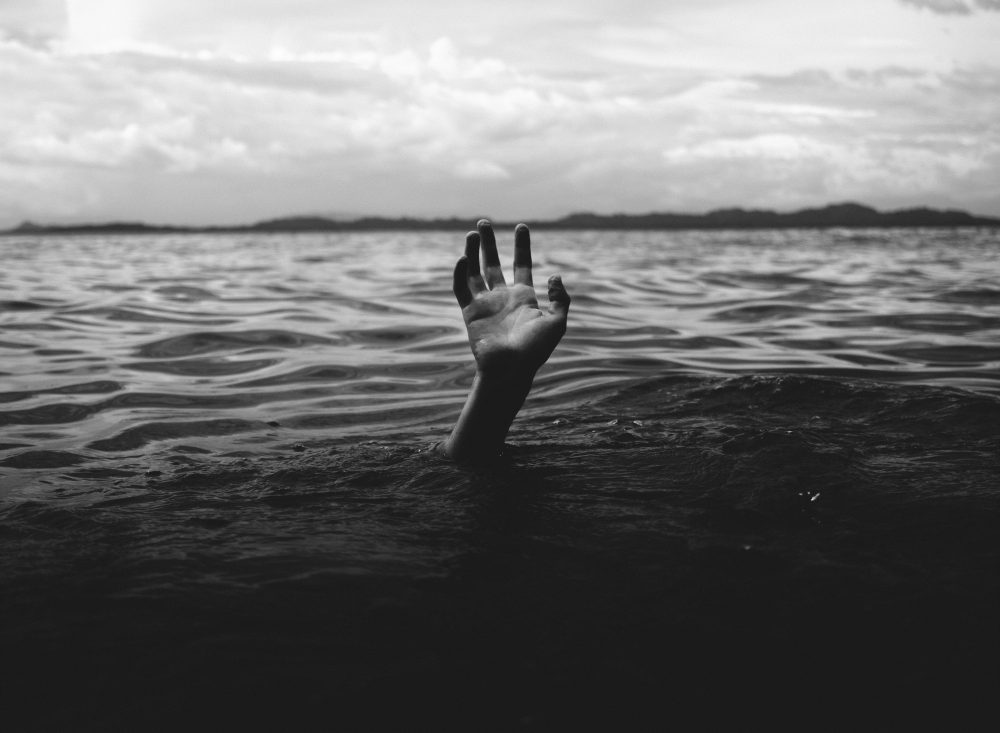 So too is the case for political and cultural news in today’s social media world. As global news, national news, local news, and personal news all blend and melt into a single information stream, news comprehension has become an empty term. Each of us is guilty of perpetuating this bottoming out on our friend groups and social media followers. We post stories about the violence in Sudan next to a picture of our Sunday brunches next to an inspirational quote from our favorite rapper. We are swapping out information coherency for social-signaling. Eroding our collective ability to stay focused long enough on a single issue to create enough inertia for institutional pressure or legislative change. Our individual desire to increase our signaling radius has come at the cost of the group’s ability to determine the signal from the noise. The superfluous from the serious. The sincere from the advertised.
Yuri Bezmenov, a former KGB officer who defected to the US, spoke of this sort of ideological subversion back in 1984. He warned western audiences that one of the primary goals of the KGB was to delegitimize and undermine key areas sectors of American Society via information saturation. To distract people from learning something constructive and proficient, especially as it relates to nation-state goals, like chemistry, physics, mathematics, history, economics, geopolitics. And then to replace these areas of focus with frivolous things like natural foods, home economics, sexual politics, pop culture, etc. To keep the population preoccupied with infighting and petty spats. The KGB saw its mission then, not to try and define the content and parameters of the debate, but to amplify and augment the debate vectors. To locate wherever social division and strife was emerging organically and then to pour as much fuel on that fire as possible.
I am not interested in validating or refuting the world views of Yuri Bezmenov. Nor do I think it’s productive to blame the current Russian Security services for every national and local division that gets inflamed. However, it is instructive to examine our political dramas and conflicts through the lens of our political foes. To try and understand why they find these tactics and strategies so persuasive still to this day. It is worth asking ourselves if we would behave differently, knowing that our online behavior was accidentally achieving the Kremlin’s geopolitical goals?”
So too is the case for political and cultural news in today’s social media world. As global news, national news, local news, and personal news all blend and melt into a single information stream, news comprehension has become an empty term. Each of us is guilty of perpetuating this bottoming out on our friend groups and social media followers. We post stories about the violence in Sudan next to a picture of our Sunday brunches next to an inspirational quote from our favorite rapper. We are swapping out information coherency for social-signaling. Eroding our collective ability to stay focused long enough on a single issue to create enough inertia for institutional pressure or legislative change. Our individual desire to increase our signaling radius has come at the cost of the group’s ability to determine the signal from the noise. The superfluous from the serious. The sincere from the advertised.
Yuri Bezmenov, a former KGB officer who defected to the US, spoke of this sort of ideological subversion back in 1984. He warned western audiences that one of the primary goals of the KGB was to delegitimize and undermine key areas sectors of American Society via information saturation. To distract people from learning something constructive and proficient, especially as it relates to nation-state goals, like chemistry, physics, mathematics, history, economics, geopolitics. And then to replace these areas of focus with frivolous things like natural foods, home economics, sexual politics, pop culture, etc. To keep the population preoccupied with infighting and petty spats. The KGB saw its mission then, not to try and define the content and parameters of the debate, but to amplify and augment the debate vectors. To locate wherever social division and strife was emerging organically and then to pour as much fuel on that fire as possible.
I am not interested in validating or refuting the world views of Yuri Bezmenov. Nor do I think it’s productive to blame the current Russian Security services for every national and local division that gets inflamed. However, it is instructive to examine our political dramas and conflicts through the lens of our political foes. To try and understand why they find these tactics and strategies so persuasive still to this day. It is worth asking ourselves if we would behave differently, knowing that our online behavior was accidentally achieving the Kremlin’s geopolitical goals?”
 All of this is not a morality tale about the boy crying wolf. A warning that when it comes time to address the sins of our society, we will have already exhausted everyone’s goodwill. It is, unfortunately, much more severe than that. With every post on social media, there is an implicit assumption that there exists an audience that not only “cares” about the content of the post, but that is also capable and willing of some sort of action beyond the post itself. An assumption that there are actual “townspeople” available and willing to help save the boy from the wolf. But what happens when the entire town is yelling “WOLF” at each other. And then right after howling “WOLF,” posting pictures of themselves on a beach in Tulum.
These kinds of social distortions at scale are potentially as corrosive for liberal democracy as the Kremlin’s contrived narrative distortions. The only difference may be that these social media distortions are decentralized and therefore, harder to isolate and remedy.
Sadly, I don’t think there is a way to curb this trend without a significant course correction with respect to our relationship to the distortions. A refusal to listen or amplify the voices clogging the information exchanges. A restraint from pouring any fuel on any fire, regardless of how warranted you think the fire is.
I once left the TV on in my house. I returned two hours later, to Sarah Mclachlan mordantly imploring me to donate money to an animal rights group. It was at the end of a long telethon or infomercial. I thought to myself; surely there is nothing more depressing than Sarah Mclaughlan begging and pleading to an empty living room. Never has there been a more apt metaphor for our social-media landscape as we find it today.
All of this is not a morality tale about the boy crying wolf. A warning that when it comes time to address the sins of our society, we will have already exhausted everyone’s goodwill. It is, unfortunately, much more severe than that. With every post on social media, there is an implicit assumption that there exists an audience that not only “cares” about the content of the post, but that is also capable and willing of some sort of action beyond the post itself. An assumption that there are actual “townspeople” available and willing to help save the boy from the wolf. But what happens when the entire town is yelling “WOLF” at each other. And then right after howling “WOLF,” posting pictures of themselves on a beach in Tulum.
These kinds of social distortions at scale are potentially as corrosive for liberal democracy as the Kremlin’s contrived narrative distortions. The only difference may be that these social media distortions are decentralized and therefore, harder to isolate and remedy.
Sadly, I don’t think there is a way to curb this trend without a significant course correction with respect to our relationship to the distortions. A refusal to listen or amplify the voices clogging the information exchanges. A restraint from pouring any fuel on any fire, regardless of how warranted you think the fire is.
I once left the TV on in my house. I returned two hours later, to Sarah Mclachlan mordantly imploring me to donate money to an animal rights group. It was at the end of a long telethon or infomercial. I thought to myself; surely there is nothing more depressing than Sarah Mclaughlan begging and pleading to an empty living room. Never has there been a more apt metaphor for our social-media landscape as we find it today.
All of this may seem a bit obvious to those who have been following the news events of the last five years, but its philosophical implications are easy to miss. Consider just 30 years ago, that getting a news anchor on CBS or NBC to run a single fabricated news story would have been seen as the ultimate disinformation campaign win. A propaganda coup requiring significant investments of time and money. Today, that entire information battle can be waged and won on Twitter and Facebook and Instagram before Anderson Cooper starts his nightly broadcast. And all for a fraction of the cost.
This tactic is especially effective because it preys upon a flaw in the human brain. That our capacity to digest and organize information is not infinitely elastic. There is an upper limit to the amount of data we can absorb before we tap out and all of it settles into low-level background noise.
I do not mean this in a spiritual or philosophical sense but in a strictly physiological one. When we place our bodies under this sort of information distress, a cascade of physiological events ensues. Cortisol floods the system. Our adrenals get drained. Our sympathetic nervous system starts to break down. Our brains tire of juggling multiple versions of reality.
The result? The viewer/reader feels disempowered and stripped of their autonomy. They become victimized by their environment like the circus elephant accepting its chains.
From a strategic perspective, it is difficult for one singular piece of fake news to mortally wound a democracy. If your long term goal is to destabilize democracy and undermine its institutions however, your best bet is to employ this information fatigue strategy. To overwhelm the populace with conflicting narratives so that they become complacent to it all, keeping the citizens in a perpetual information-whiplash
Ironically, not only have Twitter and Facebook opened up new avenues for bad actors to accelerate this whiplash, but we are now voluntarily doing it to ourselves. Helping to fuel our own civic burnout, taxing our information-consumption upper limits until it all starts to drown out.
On a long enough timeline, all informational marketing bottoms out to zero. Read enough inspirational quotes on Instagram, and it becomes irrelevant tripe. Solicit enough tips for “launching a start-up,” and it melts into a cliched blur. Adopt enough dietary hacks, and it all will eventually self-contradict.
So too is the case for political and cultural news in today’s social media world. As global news, national news, local news, and personal news all blend and melt into a single information stream, news comprehension has become an empty term. Each of us is guilty of perpetuating this bottoming out on our friend groups and social media followers. We post stories about the violence in Sudan next to a picture of our Sunday brunches next to an inspirational quote from our favorite rapper. We are swapping out information coherency for social-signaling. Eroding our collective ability to stay focused long enough on a single issue to create enough inertia for institutional pressure or legislative change. Our individual desire to increase our signaling radius has come at the cost of the group’s ability to determine the signal from the noise. The superfluous from the serious. The sincere from the advertised.
Yuri Bezmenov, a former KGB officer who defected to the US, spoke of this sort of ideological subversion back in 1984. He warned western audiences that one of the primary goals of the KGB was to delegitimize and undermine key areas sectors of American Society via information saturation. To distract people from learning something constructive and proficient, especially as it relates to nation-state goals, like chemistry, physics, mathematics, history, economics, geopolitics. And then to replace these areas of focus with frivolous things like natural foods, home economics, sexual politics, pop culture, etc. To keep the population preoccupied with infighting and petty spats. The KGB saw its mission then, not to try and define the content and parameters of the debate, but to amplify and augment the debate vectors. To locate wherever social division and strife was emerging organically and then to pour as much fuel on that fire as possible.
I am not interested in validating or refuting the world views of Yuri Bezmenov. Nor do I think it’s productive to blame the current Russian Security services for every national and local division that gets inflamed. However, it is instructive to examine our political dramas and conflicts through the lens of our political foes. To try and understand why they find these tactics and strategies so persuasive still to this day. It is worth asking ourselves if we would behave differently, knowing that our online behavior was accidentally achieving the Kremlin’s geopolitical goals?”
All of this is not a morality tale about the boy crying wolf. A warning that when it comes time to address the sins of our society, we will have already exhausted everyone’s goodwill. It is, unfortunately, much more severe than that. With every post on social media, there is an implicit assumption that there exists an audience that not only “cares” about the content of the post, but that is also capable and willing of some sort of action beyond the post itself. An assumption that there are actual “townspeople” available and willing to help save the boy from the wolf. But what happens when the entire town is yelling “WOLF” at each other. And then right after howling “WOLF,” posting pictures of themselves on a beach in Tulum.
These kinds of social distortions at scale are potentially as corrosive for liberal democracy as the Kremlin’s contrived narrative distortions. The only difference may be that these social media distortions are decentralized and therefore, harder to isolate and remedy.
Sadly, I don’t think there is a way to curb this trend without a significant course correction with respect to our relationship to the distortions. A refusal to listen or amplify the voices clogging the information exchanges. A restraint from pouring any fuel on any fire, regardless of how warranted you think the fire is.
I once left the TV on in my house. I returned two hours later, to Sarah Mclachlan mordantly imploring me to donate money to an animal rights group. It was at the end of a long telethon or infomercial. I thought to myself; surely there is nothing more depressing than Sarah Mclaughlan begging and pleading to an empty living room. Never has there been a more apt metaphor for our social-media landscape as we find it today.
Rob’s academic background is in International Political Economy, Philosophy of Mind, and Media Theory. He spent a year in Eastern Europe in 2007 studying with several think tanks concentrating on how best to protect former Soviet satellite states from election interference. In his professional career, he started a production company in 2015: SUPER FUN Productions that went on to create commercial and narrative content for a variety of global brands.