There's a specific kind of denial that shows up right before a compliance deadline hits. Saw it with GDPR. Saw it with CBAM too. It's happening again with Digital Product Passport compliance, and honestly this one's messier, because it doesn't just sit with legal or marketing; it lands on manufacturing, procurement, and IT all at once, and none of them agree on who owns it.
Ask ten supply chain leads if they're ready, and at least eight will say some version of "we're monitoring it." That phrase, in my experience, almost always means nobody's actually been assigned the problem yet.
What a Digital Product Passport Actually Requires
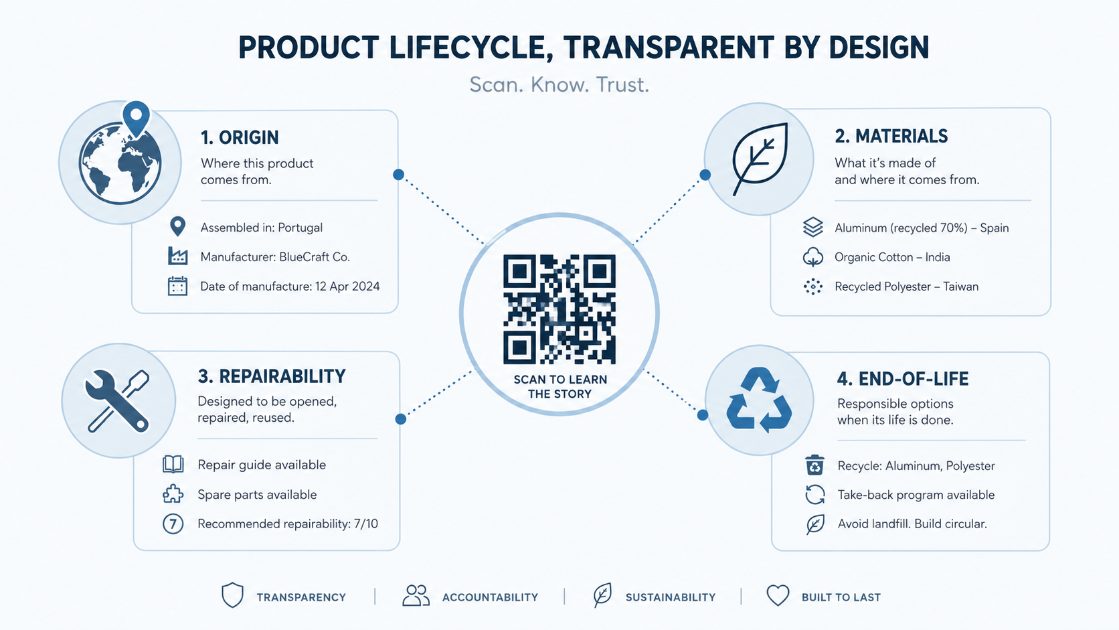
A Digital Product Passport (DPP) is a structured digital record accessed through a QR code, NFC tag, or barcode that travels with a product and carries data on its materials, origin, repairability, carbon footprint, and how it's supposed to be handled at end of life. It is not a sustainability label you slap on packaging. It's data infrastructure. And that's exactly where most companies get the scope wrong.
Under the EU's Ecodesign for Sustainable Products Regulation (ESPR), passports are rolling out category by category: batteries, textiles, and electronics first; more sectors layered in through 2027 and beyond. Nobody's asking for a glossy sustainability report here. What's being asked for is granular, verifiable, machine-readable data, sometimes down to the sub-component level, and it has to stay accurate as the product moves through its life.
That second part is where a lot of companies get caught out. A PDF spec sheet won't cut it. Not with auditors, and not with downstream buyers who'll expect live data that actually updates when something changes.
Who's Actually in Scope
The regulation covers anyone placing a covered product on the EU market, which pulls in a lot more companies than "EU-based manufacturers," frankly.
Manufacturers selling into the EU, no matter where the factory sits.
Importers and distributors, who inherit legal responsibility if the manufacturer never got compliant.
Tier 2 and Tier 3 suppliers, many of whom are now being asked for data they've genuinely never had to share before.
Private-label brands sourcing finished goods from third-party factories they don't directly control.
Here's the part that trips people up. A brand can run a spotless internal ESG program, and still fail a DPP audit because one subcontractor three tiers down won't hand over material composition data. This is the uncomfortable truth: compliance is only as strong as the weakest supplier relationship in the whole chain.
Why Supply Chains Are Behind
I've sat in enough of these planning calls now to notice the same mistake happening over and over. Teams treat this as a labelling exercise. It's not. It's a data governance problem that's wearing a labelling costume.
Three gaps keep showing up.
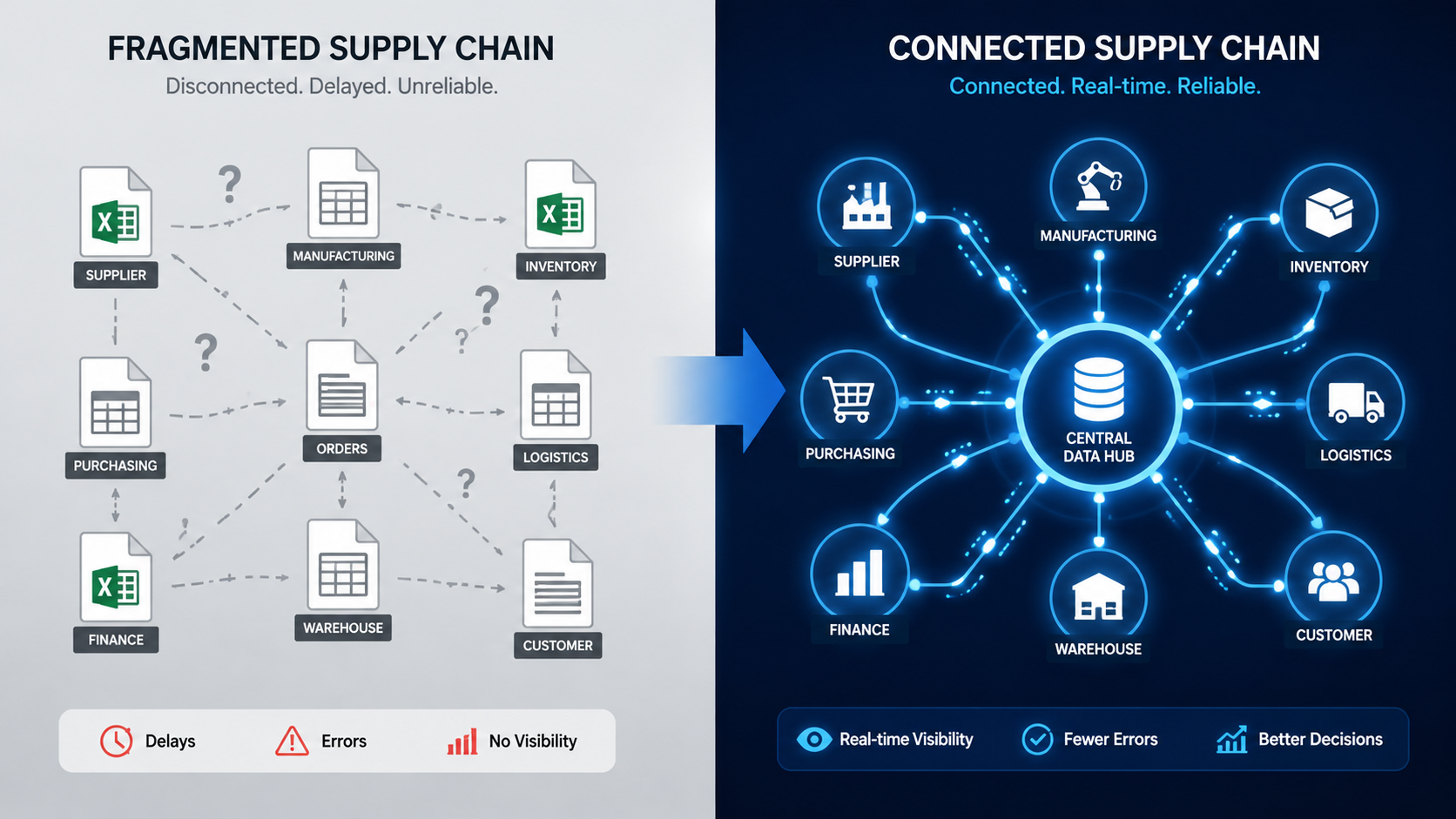
Fragmented supplier data
Most manufacturers don't have one clean source of truth for material origin, chemical composition, or carbon intensity per SKU. It's scattered spreadsheets, supplier PDFs, and, more often than anyone wants to admit, someone's email inbox.
No system built for lifecycle updates
A passport isn't static. If a product gets repaired or changes ownership, the record's supposed to reflect that. Most ERP and PLM systems weren't built with this in mind, so companies are retrofitting under a ticking clock rather than designing for it properly.
Underestimating verification
Self-declared data isn't going to be enough everywhere. Some categories will need third-party verification, and setting that up finding the right auditor, running the process can eat months if a company hasn't already got those relationships in place.
None of this is exotic or particularly new, to be clear. It's operational debt that's been easy to ignore right up until now, mostly because nobody was legally on the hook for exposing it.
What Readiness Actually Looks Like
There's a version of "compliance" that's basically a checkbox exercise, and there's a version that survives an actual audit. Most of the budget and timeline overruns happen in the gap between the two.
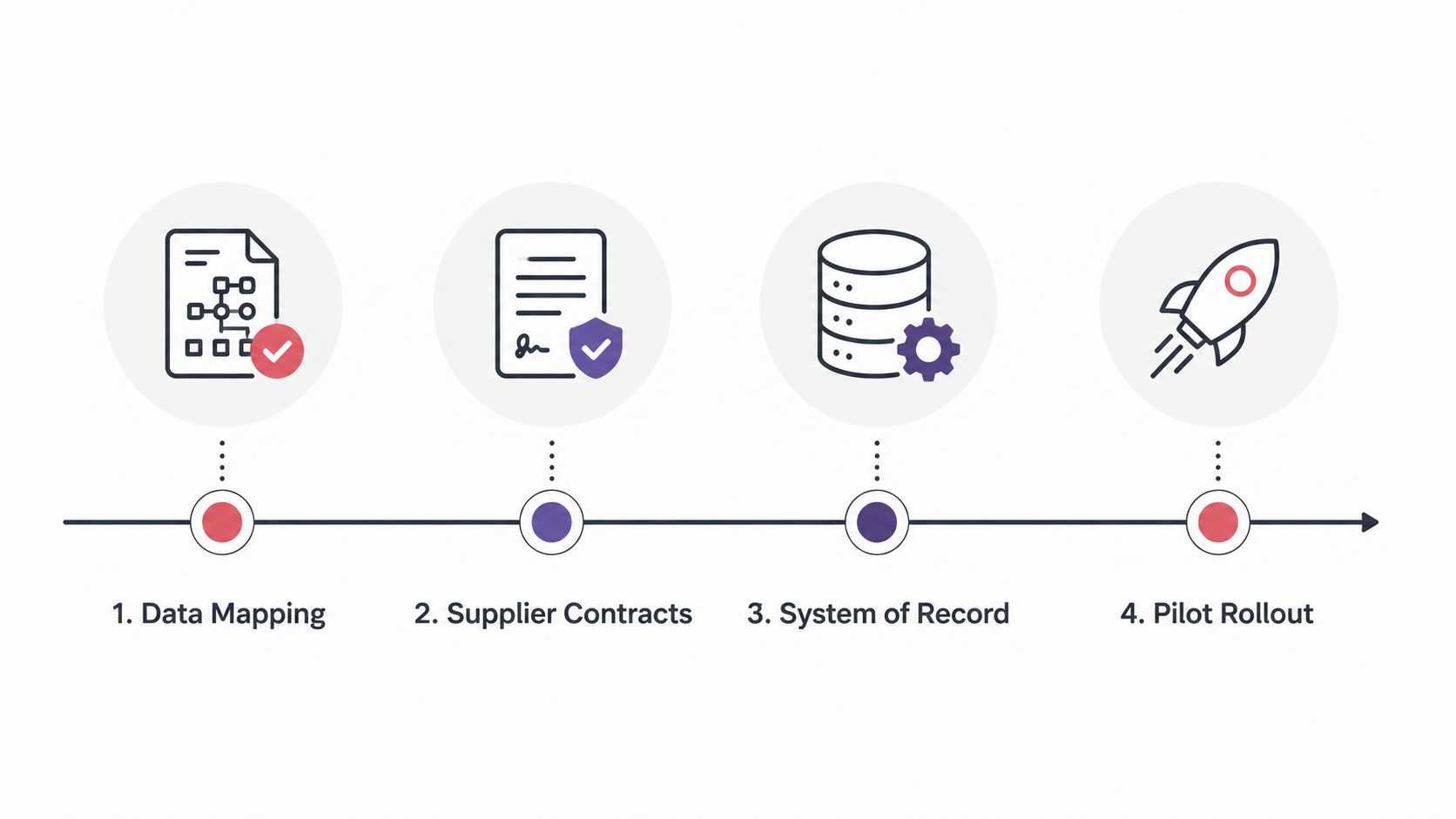
A realistic readiness path usually covers four things, roughly in this order:
Map the data before shopping for software. Figure out what actually exists, where it lives, and which suppliers are missing entirely. Buying a platform before this step is a fast way to stall six months in with nothing to show.
Put data obligations into supplier contracts. Asking nicely doesn't scale past a handful of vendors. Contractual language, defined formats, and defined update cadence are what make this hold up over years, not just this one deadline.
Build (or buy) a system of record that supports updates, not just storage. Worth pausing on this one: a well-implemented Digital Product Passport isn't a file you publish once and forget. It behaves more like a living record: version control, access permissions, an audit trail, the works.
Pilot one category before rolling out everywhere. Running a single product line through the entire lifecycle sourcing, verification, publishing, updating will surface gaps that a spreadsheet exercise simply won't catch.
Teams that started this eighteen months ago are, by most accounts, still finding surprises. That's not really a reason to panic. It's more a reason to stop treating this deadline like it's still far away.
A Note on Timing
Deadlines are staggered by product category, and enforcement guidance in some areas is still being finalised, which is exactly why "let's wait for final clarity" is a risky bet. Building data infrastructure and onboarding suppliers takes longer than finishing regulatory text usually does. Wait too long for perfect certainty, and there's a decent chance the technical work simply doesn't finish in time for the first window.
Where This Is Genuinely Difficult: No Sugarcoating It
Fair's fair: this is hard, and for reasons that aren't really anyone's fault. Multi-tier supply chains, especially in electronics and textiles, run through subcontractors who've never had to report structured sustainability data to anyone in their working life. Getting that data flowing means renegotiating relationships, not installing a new dashboard.
There's a cost question too, and it's a legitimate one. Verification, system upgrades, supplier onboarding none of it's free, and smaller manufacturers running thin margins are going to feel this a lot more than a large enterprise with a dedicated compliance team already on payroll. That's a real criticism of how the regulation's structured. Worth saying out loud instead of glossing over it.
None of that moves the deadline, though. So for a mid-sized manufacturer, the smarter move is usually to pick the one product category with the earliest enforcement date and start there, rather than trying to boil the whole portfolio at once.
Frequently Asked Questions
What is a Digital Product Passport and what data does it contain?
A Digital Product Passport (DPP) is a structured digital record accessed through a QR code, NFC tag, or barcode that travels with a product and carries data on its materials, origin, repairability, carbon footprint, and end-of-life handling instructions. It is machine-readable data infrastructure, not a sustainability label on packaging.
Which companies are required to comply with Digital Product Passport regulations?
The regulation covers manufacturers selling covered products into the EU regardless of factory location, importers and distributors who inherit legal responsibility, Tier 2 and Tier 3 suppliers, and private-label brands sourcing from third-party factories. Essentially, anyone placing a covered product on the EU market falls into scope.
What are the main product categories covered by Digital Product Passport requirements?
Batteries, textiles, and electronics are rolling out first under the EU's Ecodesign for Sustainable Products Regulation (ESPR), with more sectors being layered in through 2027 and beyond.
Why are companies struggling with Digital Product Passport compliance?
Teams often treat DPPs as a labelling exercise rather than a data governance problem, and compliance fails when even one subcontractor three tiers down won't share material composition data. Supply chain compliance is only as strong as the weakest supplier relationship.
Can a PDF specification sheet satisfy Digital Product Passport requirements?
No, a PDF spec sheet is insufficient. The regulation requires granular, verifiable, machine-readable data that must stay accurate and update as the product moves through its life, which auditors and downstream buyers will expect in live format.
Why is Digital Product Passport compliance different from previous regulations like GDPR?
Unlike GDPR or CBAM, DPP compliance doesn't sit with just legal or marketing; it lands simultaneously on manufacturing, procurement, and IT departments, and often none of them agrees on who owns the responsibility.
I'm Paridhi Purohit. I work in Marketing at Azilen Technologies, where I create content focused on AI, voice technology, customer experience, and emerging business trends for author submission. I enjoy researching complex topics and turning them into engaging, easy-to-understand articles that provide practical insights for businesses and readers alike. Through my writing, I aim to explore how innovation is transforming industries and making technology more accessible to everyone.