
In the famous book by Daron Acemoglu and James A. Robinson “Why Nations Fail” about creation of inclusive or extractive institutions in different countries, there is a section dedicated to the Black Death, or Bubonic Plague. According to the authors, it originated from China and was brought to the Mediterranean by Genoese traders, from where it quickly spread across the Europe. It was a disaster that “wiped out about half of the population of any area it hit”.
The socio-economic consequences of the Black Death were tremendous. The plague changed dramatically the way feudal economy worked. In Western Europe, few remaining servants of feudal lords demanded more freedom and higher wages. Eventually, those were granted. People became free to choose a place to live and profession. Many moved to cities. The transformation of feudal society into the free market economy started.
[caption id="attachment_20189" align="aligncenter" width="1999"] Great Plague of Marseille was the last of the significant European outbreaks of bubonic plague, 1721.[/caption]
Coronavirus cannot be compared to the bubonic plague. But as every crisis, it will bring about an inevitable transformation. The old that was already decrepit will be wiped out swiftly. The new that was about to sprout will burgeon overnight. There will be some winners and many losers, but we will all benefit as a society.
Let’s have a look at the modern times. In 2002-2003, the SARS epidemic hit the Asian region, especially China, leaving thousands sick and hundreds dead. The epidemic had unexpected consequences for the Chinese economy. Locked at homes, people switched to consuming goods online. This spurred the nascent digital sectors, such as digital mobile telephony and ecommerce. Alibaba, the Chinese technological giant, was literally born in the throes of the first coronavirus outbreak.
The lesson is similar – crisis is a stress test for innovation and a death sentence for obsolescence. Technology can emerge from it stronger than ever. The question is “What kind of technology?”
Great Plague of Marseille was the last of the significant European outbreaks of bubonic plague, 1721.[/caption]
Coronavirus cannot be compared to the bubonic plague. But as every crisis, it will bring about an inevitable transformation. The old that was already decrepit will be wiped out swiftly. The new that was about to sprout will burgeon overnight. There will be some winners and many losers, but we will all benefit as a society.
Let’s have a look at the modern times. In 2002-2003, the SARS epidemic hit the Asian region, especially China, leaving thousands sick and hundreds dead. The epidemic had unexpected consequences for the Chinese economy. Locked at homes, people switched to consuming goods online. This spurred the nascent digital sectors, such as digital mobile telephony and ecommerce. Alibaba, the Chinese technological giant, was literally born in the throes of the first coronavirus outbreak.
The lesson is similar – crisis is a stress test for innovation and a death sentence for obsolescence. Technology can emerge from it stronger than ever. The question is “What kind of technology?”
 The pandemic has brought the videoconferencing platform Zoom in the global spotlight. The number of calls on Zoom skyrocketed from 10 million daily in December 2019 to more than 200 million daily in March. “Zoominars” are replacing traditional “one-way” webinars, because they resemble much closer real-life conversations. The stocks of Zoom soared, with nearly 100% increase in 2020. This might be a combination of a good product and sheer luck, but the trend for videoconferencing is likely to stay after the pandemic is over. What is likely to go away for good are traditional landlines and rudimentary chatrooms that did not adapt to the challenges of new times.
The “working-from-home” revolution also put incredible pressure on companies that have not yet moved to cloud. Some investors bet heavily on cloud providers and expect cloud computing to continue growing in the post-crisis era. Once companies appreciate the ease and convenience of outsourced data centers they will be reluctant to get back to on-premise servers.
Customer service delivery has also changed during the pandemic. Amazon has been hiring extra 100,000 of workers during March and now is hiring another 75,000, as many customers start buying their essentials online. But also niche companies, like Peloton (online fitness classes and upscale fitness equipment) and Chewy (online pet food and medicine delivery) are experiencing boom in usage and a resulting upsurge in stock prices. For example, Peloton stock has outperformed 92% of all companies in the IBD database over the past 12 months. Chewy stock has gained 22% since its IPO launch last June. We may wonder if the tendency to consume online will persist when the lockdown is lifted. It takes 21 days to form a non-complex habit – and in many countries lockdown lasts more than 21 days. There is a big chance that people will stick to their habits of using online services once the pandemic is over. An example of the SARS outbreak and the resulting boost in the China’s e-commerce sector is a testament to this.
The pandemic has brought the videoconferencing platform Zoom in the global spotlight. The number of calls on Zoom skyrocketed from 10 million daily in December 2019 to more than 200 million daily in March. “Zoominars” are replacing traditional “one-way” webinars, because they resemble much closer real-life conversations. The stocks of Zoom soared, with nearly 100% increase in 2020. This might be a combination of a good product and sheer luck, but the trend for videoconferencing is likely to stay after the pandemic is over. What is likely to go away for good are traditional landlines and rudimentary chatrooms that did not adapt to the challenges of new times.
The “working-from-home” revolution also put incredible pressure on companies that have not yet moved to cloud. Some investors bet heavily on cloud providers and expect cloud computing to continue growing in the post-crisis era. Once companies appreciate the ease and convenience of outsourced data centers they will be reluctant to get back to on-premise servers.
Customer service delivery has also changed during the pandemic. Amazon has been hiring extra 100,000 of workers during March and now is hiring another 75,000, as many customers start buying their essentials online. But also niche companies, like Peloton (online fitness classes and upscale fitness equipment) and Chewy (online pet food and medicine delivery) are experiencing boom in usage and a resulting upsurge in stock prices. For example, Peloton stock has outperformed 92% of all companies in the IBD database over the past 12 months. Chewy stock has gained 22% since its IPO launch last June. We may wonder if the tendency to consume online will persist when the lockdown is lifted. It takes 21 days to form a non-complex habit – and in many countries lockdown lasts more than 21 days. There is a big chance that people will stick to their habits of using online services once the pandemic is over. An example of the SARS outbreak and the resulting boost in the China’s e-commerce sector is a testament to this.
 Lockdown brought the property market to a halt, but real estate agencies found innovative ways to keep it going. 3D walkthroughs are getting traction, as they allow potential buyers to see the property without the need to be physically present. Chinese companies pioneered the switch to completely virtual viewings. Large developers made nearly 350,000 virtual house viewings per day in February. European realtors are now catching up. Many firms in the UK already rely on virtual, both self- and agent-guided tours to secure property transactions. VR technology is provided by start-ups like Matterport, a digital spatial data platform that create a virtual twin of any physical asset. The property then can be viewed on any digital device and also through 3D headsets for a more immersive experience.
Interestingly, VR technology in real estate has been around for a while, but until the coronavirus outbreak it had been considered more as a “frivolous add-on”. Deprived of mobility, customers now become more engaged in virtual viewings. The crisis accelerated the trend that had been already on the upward move.
Another examples of the high touch replaced with the high tech include virtual museum tours, virtual shopping and even virtual disco. If restrictions last long enough, one can imagine virtual travelling and sightseeing. Would you fancy a virtual tour of Machu Picchu or Egyptian pyramids taken directly from your home? As good as it sounds, VR has its own limitation. First, a truly immersive experience requires expensive headsets. Second, once restrictions are lifted, we can expect the drop in interest in VR alternatives. However, customers still will use VR tech as a complement to offline, for example, to shortlist options and save time spent on in-person viewings and shop visits. In this way, the pandemic helps further solidify the role of VR in the customer delivery experience.
Lockdown brought the property market to a halt, but real estate agencies found innovative ways to keep it going. 3D walkthroughs are getting traction, as they allow potential buyers to see the property without the need to be physically present. Chinese companies pioneered the switch to completely virtual viewings. Large developers made nearly 350,000 virtual house viewings per day in February. European realtors are now catching up. Many firms in the UK already rely on virtual, both self- and agent-guided tours to secure property transactions. VR technology is provided by start-ups like Matterport, a digital spatial data platform that create a virtual twin of any physical asset. The property then can be viewed on any digital device and also through 3D headsets for a more immersive experience.
Interestingly, VR technology in real estate has been around for a while, but until the coronavirus outbreak it had been considered more as a “frivolous add-on”. Deprived of mobility, customers now become more engaged in virtual viewings. The crisis accelerated the trend that had been already on the upward move.
Another examples of the high touch replaced with the high tech include virtual museum tours, virtual shopping and even virtual disco. If restrictions last long enough, one can imagine virtual travelling and sightseeing. Would you fancy a virtual tour of Machu Picchu or Egyptian pyramids taken directly from your home? As good as it sounds, VR has its own limitation. First, a truly immersive experience requires expensive headsets. Second, once restrictions are lifted, we can expect the drop in interest in VR alternatives. However, customers still will use VR tech as a complement to offline, for example, to shortlist options and save time spent on in-person viewings and shop visits. In this way, the pandemic helps further solidify the role of VR in the customer delivery experience.
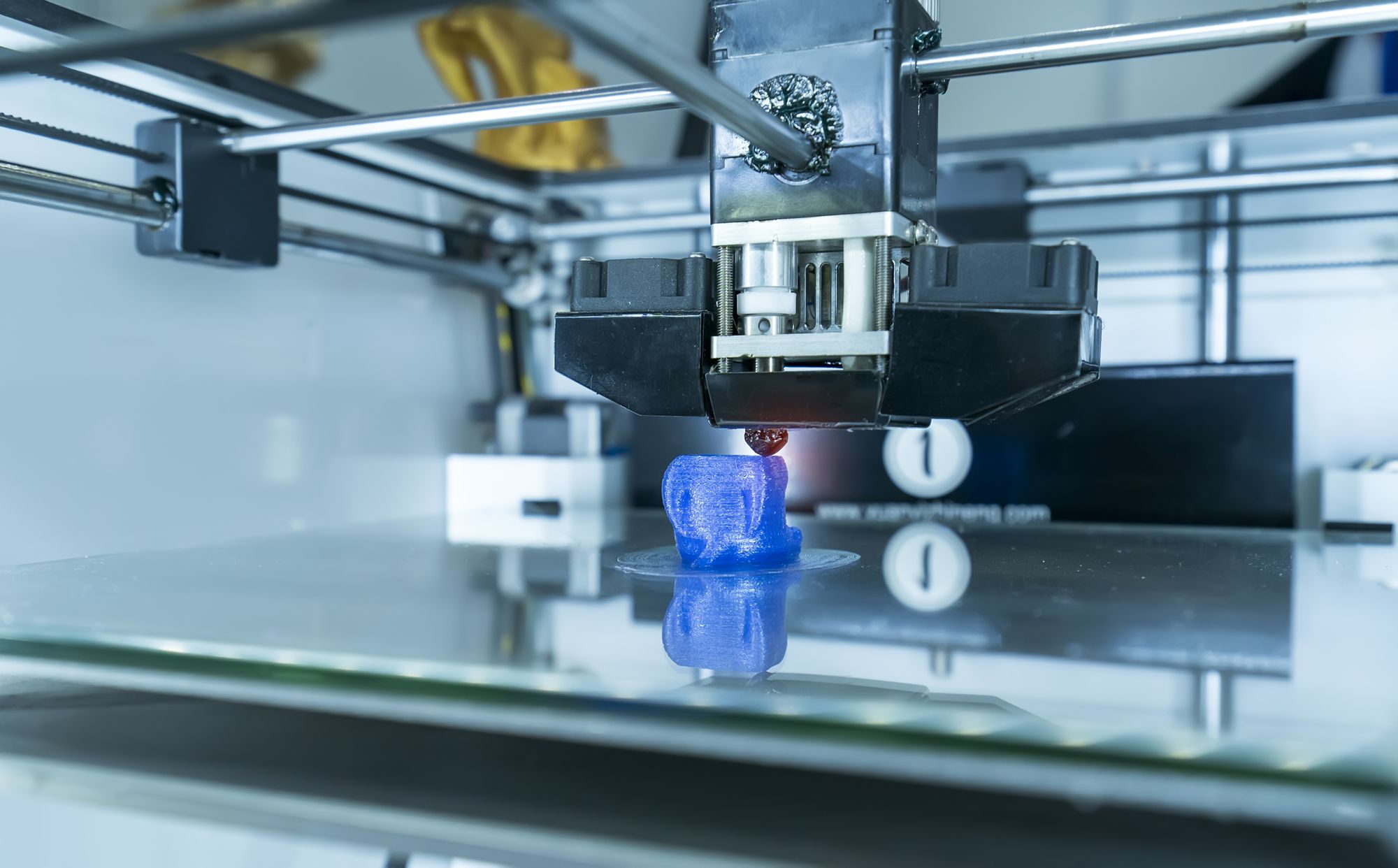 3D printing has been one of these technologies that promised to change the world but up until now fell flat on these promises. But the shortage of personal protective supplies gave it a new lease of life. Large manufacturers (e.g. Volkswagen and HP) use industrial 3D printers to quickly repurpose their production to provide parts for hospitals. Start-ups, like Isinnova, use 3D printing to help combat coronavirus. This Italian company created a 3D printable design of emergency ventilator masks by adjusting snorkelling masks already available on the market. The new model of distributed manufacturing is emerging. In the so-called "citizen supply chain", owners of 3D printers share design templates, print products at home and organise their distribution to hospitals. Isinnova made its mask design freely available, so any owner of a 3D printer can reproduce it. Unlike traditional supply chains, the citizen supply chain does not have a single point of failure, it is easily adaptable to the changing demand and ensures the higher level of physical safety for people involved in the distributed manufacturing.
It is hard to predict the fate of 3D printing beyond the current crisis. Yet, technology which is able to produce necessary items quickly, almost “in garage”, will fit perfectly the idea of localising production in the post-COVID economic order. Probably, during the next crisis people will print bog rolls at home instead of storming local supermarkets.
3D printing has been one of these technologies that promised to change the world but up until now fell flat on these promises. But the shortage of personal protective supplies gave it a new lease of life. Large manufacturers (e.g. Volkswagen and HP) use industrial 3D printers to quickly repurpose their production to provide parts for hospitals. Start-ups, like Isinnova, use 3D printing to help combat coronavirus. This Italian company created a 3D printable design of emergency ventilator masks by adjusting snorkelling masks already available on the market. The new model of distributed manufacturing is emerging. In the so-called "citizen supply chain", owners of 3D printers share design templates, print products at home and organise their distribution to hospitals. Isinnova made its mask design freely available, so any owner of a 3D printer can reproduce it. Unlike traditional supply chains, the citizen supply chain does not have a single point of failure, it is easily adaptable to the changing demand and ensures the higher level of physical safety for people involved in the distributed manufacturing.
It is hard to predict the fate of 3D printing beyond the current crisis. Yet, technology which is able to produce necessary items quickly, almost “in garage”, will fit perfectly the idea of localising production in the post-COVID economic order. Probably, during the next crisis people will print bog rolls at home instead of storming local supermarkets.
Great Plague of Marseille was the last of the significant European outbreaks of bubonic plague, 1721.[/caption]
Coronavirus cannot be compared to the bubonic plague. But as every crisis, it will bring about an inevitable transformation. The old that was already decrepit will be wiped out swiftly. The new that was about to sprout will burgeon overnight. There will be some winners and many losers, but we will all benefit as a society.
Let’s have a look at the modern times. In 2002-2003, the SARS epidemic hit the Asian region, especially China, leaving thousands sick and hundreds dead. The epidemic had unexpected consequences for the Chinese economy. Locked at homes, people switched to consuming goods online. This spurred the nascent digital sectors, such as digital mobile telephony and ecommerce. Alibaba, the Chinese technological giant, was literally born in the throes of the first coronavirus outbreak.
The lesson is similar – crisis is a stress test for innovation and a death sentence for obsolescence. Technology can emerge from it stronger than ever. The question is “What kind of technology?”
Innovation Machine
Among the doom and gloom peddled on media, there are voices that point at the enormous level and speed of innovation currently going under the hood. Most of the innovation occurs in healthcare: vaccines, medical treatment, hospital equipment, etc. Learning spreads quickly across the world and collaboration replaces the usual “tit-for-tat” competition between countries. The fast learning loop (weeks instead of months or years) makes us think about the “Innovation machine”, in which the whole society participates. This is a very beautiful thing to witness. Though the fight against COVID-19 is often compared to the “war”, the resulting innovation is no comparable. While warfare innovation has the negative vector and aims at killing and destruction, the pandemic innovation has a positive thrust − it aims at saving lives and making us, as a society, “anti-fragile”. [embedyt] https://www.youtube.com/watch?v=GckXys0RInw[/embedyt] Many companies in non-healthcare sectors start asking questions of how their business could operate in the time of disruption and beyond. How will the customer needs change in the post-COVID world? How to better engage with customers when in-person interactions should be avoided? How to organise the physical process (repair, delivery, preparation of food) when human contacts should be minimised? How to deal with disruption of supply chains? How to minimise the effects of shock on financial markets and investments? Almost every area of our life faces the great challenge: how can we move from the big, complex and fragile to the nimble, distributed and anti-fragile? Investors are watching closely the potential winners of the pandemic disruption: “everything online”, VR in high-touch services, and distributed manufacturing, to mention a few. Let’s look at them in turn.Everything Online
When people are locked at home, technology helps them continue their normal life. This tech includes facilitating technology and customer service delivery. Facilitating technology refers to communication software, such as Zoom and Microsoft teams; cloud-based B2B services, like DocuSign (digital signature); cloud providers, etc.
The pandemic has brought the videoconferencing platform Zoom in the global spotlight. The number of calls on Zoom skyrocketed from 10 million daily in December 2019 to more than 200 million daily in March. “Zoominars” are replacing traditional “one-way” webinars, because they resemble much closer real-life conversations. The stocks of Zoom soared, with nearly 100% increase in 2020. This might be a combination of a good product and sheer luck, but the trend for videoconferencing is likely to stay after the pandemic is over. What is likely to go away for good are traditional landlines and rudimentary chatrooms that did not adapt to the challenges of new times.
The “working-from-home” revolution also put incredible pressure on companies that have not yet moved to cloud. Some investors bet heavily on cloud providers and expect cloud computing to continue growing in the post-crisis era. Once companies appreciate the ease and convenience of outsourced data centers they will be reluctant to get back to on-premise servers.
Customer service delivery has also changed during the pandemic. Amazon has been hiring extra 100,000 of workers during March and now is hiring another 75,000, as many customers start buying their essentials online. But also niche companies, like Peloton (online fitness classes and upscale fitness equipment) and Chewy (online pet food and medicine delivery) are experiencing boom in usage and a resulting upsurge in stock prices. For example, Peloton stock has outperformed 92% of all companies in the IBD database over the past 12 months. Chewy stock has gained 22% since its IPO launch last June. We may wonder if the tendency to consume online will persist when the lockdown is lifted. It takes 21 days to form a non-complex habit – and in many countries lockdown lasts more than 21 days. There is a big chance that people will stick to their habits of using online services once the pandemic is over. An example of the SARS outbreak and the resulting boost in the China’s e-commerce sector is a testament to this.
High Touch Replaced by High Tech?
The pandemic has also changed the traditional approach to “high-touch” services that require physical involvement. Some sectors have been the last redoubt of brick-and-mortar business models, because of the nature of services (e.g. real estate or beauty treatment) or because of the nature of customers (e.g. elderly or very high-end customers). During the current crisis, companies seek to move these services online. New technology (such as virtual reality or VR) comes to help the struggling high-touch markets.
Lockdown brought the property market to a halt, but real estate agencies found innovative ways to keep it going. 3D walkthroughs are getting traction, as they allow potential buyers to see the property without the need to be physically present. Chinese companies pioneered the switch to completely virtual viewings. Large developers made nearly 350,000 virtual house viewings per day in February. European realtors are now catching up. Many firms in the UK already rely on virtual, both self- and agent-guided tours to secure property transactions. VR technology is provided by start-ups like Matterport, a digital spatial data platform that create a virtual twin of any physical asset. The property then can be viewed on any digital device and also through 3D headsets for a more immersive experience.
Interestingly, VR technology in real estate has been around for a while, but until the coronavirus outbreak it had been considered more as a “frivolous add-on”. Deprived of mobility, customers now become more engaged in virtual viewings. The crisis accelerated the trend that had been already on the upward move.
Another examples of the high touch replaced with the high tech include virtual museum tours, virtual shopping and even virtual disco. If restrictions last long enough, one can imagine virtual travelling and sightseeing. Would you fancy a virtual tour of Machu Picchu or Egyptian pyramids taken directly from your home? As good as it sounds, VR has its own limitation. First, a truly immersive experience requires expensive headsets. Second, once restrictions are lifted, we can expect the drop in interest in VR alternatives. However, customers still will use VR tech as a complement to offline, for example, to shortlist options and save time spent on in-person viewings and shop visits. In this way, the pandemic helps further solidify the role of VR in the customer delivery experience.
Distributed Manufacturing
Manufacturing is one of the industries affected by the Corona-crisis with many factories being shut down and workers furloughed. On the other hand, the crisis has boosted demand for emergency supplies, for which our manufacturing was not ready. While there are structural problems in the existing global supply, innovation helps quickly fill the production gaps.
3D printing has been one of these technologies that promised to change the world but up until now fell flat on these promises. But the shortage of personal protective supplies gave it a new lease of life. Large manufacturers (e.g. Volkswagen and HP) use industrial 3D printers to quickly repurpose their production to provide parts for hospitals. Start-ups, like Isinnova, use 3D printing to help combat coronavirus. This Italian company created a 3D printable design of emergency ventilator masks by adjusting snorkelling masks already available on the market. The new model of distributed manufacturing is emerging. In the so-called "citizen supply chain", owners of 3D printers share design templates, print products at home and organise their distribution to hospitals. Isinnova made its mask design freely available, so any owner of a 3D printer can reproduce it. Unlike traditional supply chains, the citizen supply chain does not have a single point of failure, it is easily adaptable to the changing demand and ensures the higher level of physical safety for people involved in the distributed manufacturing.
It is hard to predict the fate of 3D printing beyond the current crisis. Yet, technology which is able to produce necessary items quickly, almost “in garage”, will fit perfectly the idea of localising production in the post-COVID economic order. Probably, during the next crisis people will print bog rolls at home instead of storming local supermarkets.
Crossing the Chasm
Now let’s ask ourselves what these technologies and companies have in common? What helps them surf on the top of the wave that threatens to swamp millions of businesses? All these innovations are not exactly new. They have been around for a while, but did not serve a pressing need. Zoom was launched in 2011, but it is in March 2020 when its gradual climb turned into a boom. Similarly, 3D printing became a buzzword in 2012 and then stayed in limbo until recently. Real estate agencies and retailers have been experimenting with VR, but until the lockdown, customer engagement remained lacklustre. It is only when “nice to have” turn into “need to have”, the technology gains mainstream adoption. Cutting off millions of people from the external world became this pivotal point. To re-iterate, the crisis did not invent anything new. It boosted what was already there. It helped a number of companies cross the chasm and gain mainstream adoption “on steroids”, as a matter of weeks. This adoption might bounce back, but will never return to the conservative point where it had been before the COVID-19. Habits form in 21 days. VR, remote working, online deliveries and distributed manufacturing will gradually become a new norm for mainstream customers. As Paul Romer said: “A crisis is a terrible thing to waste”.
Katia Ray (Perevoshchikova) is a technology expert with years of experience in LegalTech and AI implementation programmes. She is passionate about application of AI to various areas, including law, sport, entertainment, management, etc. A contributor to LEGALTECH book (coming Q2 2020). Researcher at the University of Southampton and University College London, a former researcher at the Higher School of Economics (Moscow).