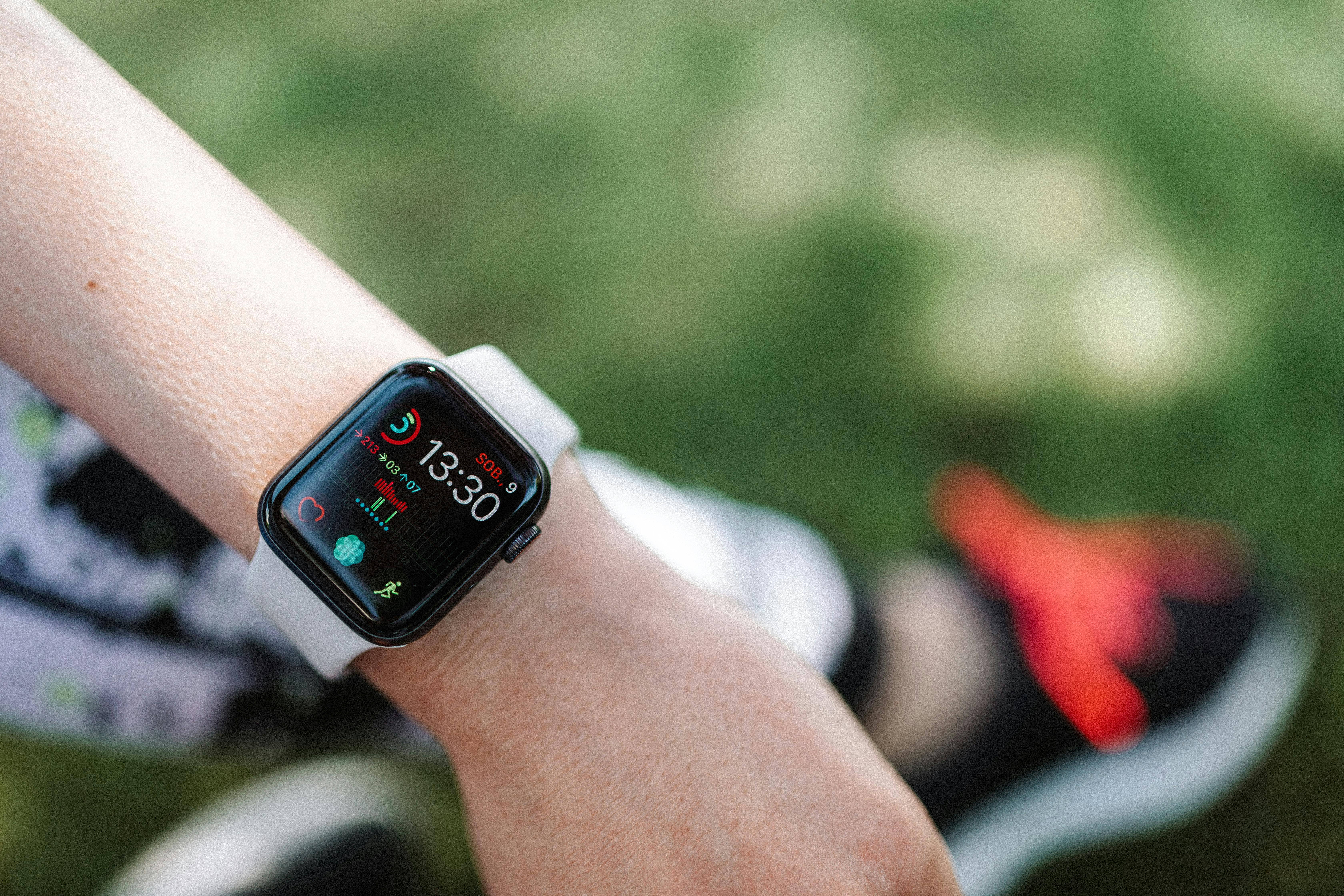
If you open any smartwatch or fitness app today, you'll see a long list of health metrics: heart rate, sleep score, blood oxygen, stress level, HRV and more. These devices collect an incredible amount of data about our bodies every day.
But collecting data and understanding it are two very different things. Imagine two people receiving the same alert: "Your heart rate is higher than usual." One has just climbed a flight of stairs, while the other has been sitting at a desk for an hour. The watch detects the same change, but the reason behind it is completely different.
This is where today's wearables still struggle. They are becoming better at measuring the body, but they often don't understand why those measurements change.
This missing piece is called context. Computer scientist Anind Dey describes context as any information that helps explain a person's situation, not just what is happening, but also where, when and under what circumstances it happens. As wearable technology continues to improve, understanding context may become even more important than collecting more data.
Wearables Know What Happens: Not Why It Happens
Modern wristbands and smart rings gather a staggering amount of physiological information every second. They log your resting heart rate, measure heart rate variability (HRV), track sleep stages, count daily steps, monitor blood oxygen saturation (SpO2), record electrical heart activity via ECG and track subtle fluctuations in skin temperature.
Yet, all of these data streams represent raw observations rather than explanations. A high-precision sensor can detect an elevation in heart rate from 65 bpm to 110 bpm within a ten-second window. However, that biometric spike could be caused by an intense indoor cycling session, an unexpected work email, a third cup of espresso, acute dehydration, an onset of fever or sheer emotional excitement.
To the isolated optical sensor, every single one of those scenarios produces an identical cluster of data points: a compressed peak-to-peak interval on a graph. The sensor observes what happens to your physiology, but it remains completely blind to why it happened.
This missing "why" is what researchers define as context. Early foundational research on defining and evaluating context for wearable computing demonstrated that a wearable device becomes genuinely useful only when it adapts to the dynamic state of its user. Without that capability, even the most sensitive physiological tracker merely presents a list of detached statistics. When a device lacks the background narrative behind a metric, it cannot offer meaningful guidance, leaving the user to do the heavy lifting of interpretation.
Context Is More Than Location
When people hear the term "context" in computing, they usually think of geographic location. They assume that if a device knows its GPS coordinates, it knows what the user is doing. If you are at a gym, it assumes you are working out, if you are at an airport, it assumes you are traveling.
However, location is only a tiny slice of situational reality. True context encompasses a vast web of environmental, behavioral and internal variables:
Current Activity & Movement: Are you sitting, walking, lifting weights or riding a bus?
Environmental Conditions: What is the ambient temperature, humidity, noise level and lighting?
Temporal Patterns & Schedules: What time of day is it and what does your personal calendar look like?
Long-Term Habits & Baselines: What is your typical physiological response to a night of poor sleep or a busy work cycle?
Internal State: What is your cumulative sleep debt, physical fatigue level or ongoing psychological workload?
To understand how these variables reshape data, consider the classic 10,000-step metric.
Ten thousand steps carries a radically different biological meaning depending on who is taking them and under what conditions. For a sedentary office worker, reaching that goal is a healthy milestone. For a marathon runner on an active recovery day, it might indicate overtraining. For an individual recovering from joint surgery, it could represent dangerous physical overexertion.
The data point remains identical across all four individuals, but without situational awareness, the number loses its diagnostic value. As computer scientists Albrecht Schmidt and his colleagues famously pointed out in their seminal paper ‘There is More to Context Than Location’, context is a multi-layered structure that fuses physical environment, human activity and social setting. Context is not just coordinates on a map, context is meaning.
The Missing Layer Between Sensors and AI
The wearable industry currently faces an architectural problem. On one end, hardware engineers have created exceptional biological sensors. On the other end, software developers have deployed sophisticated artificial intelligence models. Yet, the bridge connecting these two powerful technologies is surprisingly fragile.
Consider the basic pipeline of how a modern health device makes a decision:
Sensors → Data → [ Missing Context Layer ] → AI Decision
Because that middle layer is thin or nonexistent, today’s AI models are forced to reason over incomplete data streams. When you feed isolated sensor data directly into a large language model or algorithmic engine, you get mathematically logical recommendations that are completely absurd in practice.
For instance, your smart ring might notice that your heart rate variability dropped overnight and your body temperature rose slightly. Its algorithmic model triggers a canned notification: "Your recovery score is low (42%). Take it easy today, stay in bed and avoid stressful activities."
What the AI does not know is that you spent half the night soothing a crying newborn, you have already downed a double-shot espresso and you are scheduled to deliver a career-defining keynote presentation to a prospective client in two hours. Telling you to "stay in bed" is not just unhelpful, it is completely out of touch with your reality.
If the system had access to your calendar, your morning movement patterns and historical data about your response to stress, its advice would be vastly different: "You had a rough night, but you have a major presentation at 10 AM. Focus on hydration, skip a second coffee to avoid jitters and schedule a 20-minute power nap at 2 PM when your calendar clears up."
The missing ingredient is not computational power, it is situational awareness. Recent research on situation identification in smart wearable computing systems shows that fusing multi-source environmental data with machine learning allows devices to recognize complex real-world situations with over 96% accuracy. Contextual intelligence acts as the essential operating system for wearable AI, turning raw data streams into actionable advice.
Why This Is Becoming a Massive Business Opportunity
From a business perspective, the wearable market is entering a transformation. For years, hardware manufacturers competed on physical specifications: adding a green LED, adding an infrared sensor, extending battery life from two days to seven days or making the casing thinner.
However, hardware innovations inevitably hit a plateau. Sensors become miniaturized, commodity components that any manufacturer can buy off the shelf. Microprocessors become cheaper and battery chemistry reaches physical limits. When every $50 fitness tracker can monitor your heart rate and count your steps with reasonable accuracy, hardware specs cease to be a durable moat.
What becomes almost impossible to copy? Contextual intelligence. Tech giants like Apple, Google, Samsung, Meta and OpenAI are pouring billions of dollars into personal AI assistants. But a truly personalized AI cannot exist without personal context. A general-purpose AI model knows how to summarize a document or write a snippet of code, but it has no idea why your heart rate spiked at 3:15 PM today.
The company that bridges this gap will control the most valuable real estate in consumer technology. In the early days of the web, search engines won by indexing static pages. In the next era of personal computing, wearable systems will win by ranking real-time relevance. Understanding a user's physical, mental and environmental state in real time creates an incredible competitive advantage. Once a device truly understands your life patterns, switching to a competitor's device feels like moving to a new country and starting over.
The Future Wearable Might Predict Instead of Track
When wearables master contextual intelligence, their primary value proposition will shift from reactive tracking to proactive prediction.
Instead of simply reporting past events, future devices will anticipate upcoming physical and mental states based on environmental cues, past behavior and real-time biological signals.
Reactive Tracking (Current) | Proactive Context (Future) |
"You slept poorly last night." | "You consistently experience disrupted REM sleep before major client presentations. Here is how to adjust your wind-down routine tonight." |
"Heart rate elevated: 115 bpm." | "Your heart rate has spiked before every Thursday 2 PM budget meeting for the past month. Consider taking 3 deep breaths now." |
"Dehydration alert: Drink water." | "You typically become severely dehydrated after long-distance flights. Start hydrating now before your boarding time." |
This shift transforms the device from a passive logging tool into an active partner. Long-standing studies on context awareness for wearable computers have argued that wearable tech reaches its highest utility when it operates seamlessly in the background, making predictions based on learned user behaviors rather than bombarding the user with raw data points.
The Shift from Measuring to Understanding
For more than a decade, the consumer electronics industry operated on a simple strategy: add another sensor, track another metric and present another chart.
Yet, metrics without meaning only create noise. A notification that warns you about a high heart rate while you are running uphill is not intelligent, it is an annoyance. A notification that knows you are stressed, understands your calendar and offers a timely, actionable recommendation is transformative.
The next major breakthrough in consumer technology will not come from building a sensor that measures your body 5% more accurately. It will come from software architectures that understand what those measurements mean in the real world. Numbers alone rarely tell a complete story but it is context that gives those numbers meaning.
The companies that win the wearable race will not be the ones collecting the most data, but the ones that understand it best.
Frequently Asked Questions
What is the main limitation of current wearable devices?
Current wearables are excellent at measuring health metrics like heart rate and sleep, but they lack context—they don't understand why those measurements change. For example, they can detect a elevated heart rate but cannot determine if it's from exercise, stress, caffeine, or illness.
What does 'context' mean in wearable computing?
According to computer scientist Anind Dey, context is any information that helps explain a person's situation, including not just what is happening, but also where, when, and under what circumstances it happens.
Why can't wearables distinguish between different causes of the same health metric?
Wearable sensors are isolated from the user's actual activities and circumstances. They only collect raw physiological data—for example, a high heart rate looks identical whether caused by exercise, stress, or a fever—but have no way to access information about what the user is actually doing.
Is knowing a user's location enough to provide meaningful context for wearables?
No, location alone is not sufficient context. A device knowing you're at a gym might assume you're working out, but it cannot account for the many other activities or circumstances happening at that location that could affect your health metrics.
How does the lack of context affect the usefulness of wearable health data?
Without context, wearables can only present disconnected statistics without meaningful guidance. Users must interpret the data themselves, making the device less genuinely useful even if it has highly sensitive sensors.
What type of data do modern wearables collect?
Modern wearables collect extensive physiological data including resting heart rate, heart rate variability (HRV), sleep stages, daily steps, blood oxygen saturation (SpO2), electrical heart activity (ECG), and skin temperature fluctuations.

Hi, I'm Shradha, a wearable tech writer geeking out over wearable tech and what's coming next in health tech. I've covered everything from sleep trackers to smart rings to blood pressure wearables, always digging into what actually works versus what's just hype. Ask me about my ring data, I'll talk your ear off.