The Quiet Operators: How AI Agents Are Rebuilding Supply Chains from the Inside Out

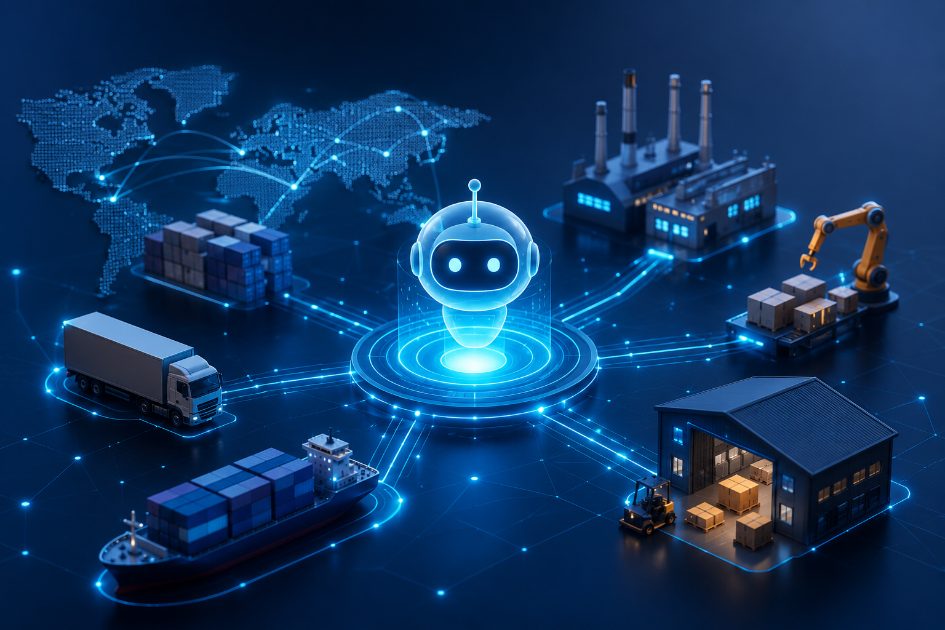
Supply chain disruptions cost the global economy an estimated $950 billion annually. Yet for most of the past decade, the "solution" was the same: more dashboards, more analysts, more spreadsheets with slightly better formulas.
Then something changed. Not with the supply chain itself, but with what we mean by "automation."
This piece explains what AI agents actually do in a supply chain context, where the real value is being captured, and what the data reveals about adoption patterns, failure modes, and the strategic edge for investors and operators who understand the distinction.
What Makes an AI Agent Different From "AI in the Supply Chain"
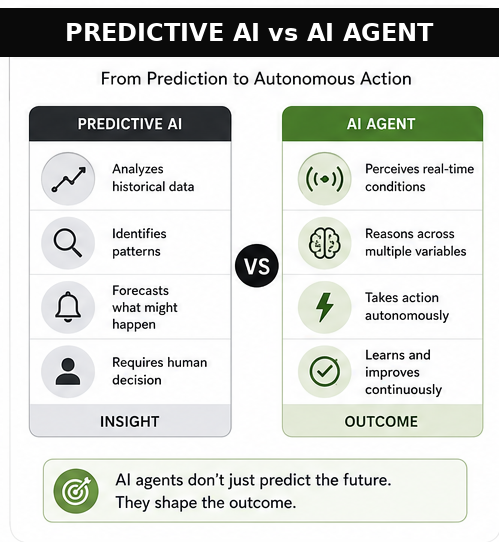
Most AI in supply chain implementations are predictive models. They surface insights, flag anomalies, or generate forecasts. A human still decides what to do. That is valuable, but it is fundamentally a better reporting layer.
An AI agent is different. It is goal-directed, given an objective like minimizing stockout risk or reducing lead time variance, rather than just a dataset. It is autonomous, placing orders, rerouting shipments, and adjusting safety stock levels without human approval on each step. It is self-correcting, observing outcomes and updating its behavior within operating constraints. And it is multi-system, orchestrating across ERP, TMS, WMS, and supplier portals simultaneously.
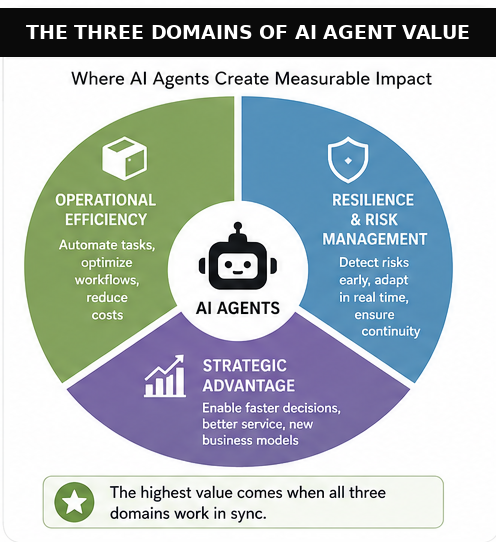
The Three Domains Where Agents Are Creating Measurable Value
1. Demand Signal Processing at Machine Speed
Human forecasters, even excellent ones, operate on weekly or monthly planning cycles. They work from historical data plus judgment. The challenge: modern demand signals move in minutes, not months.
A major fashion retailer running an AI agent on demand sensing reduced forecast error by 23% within one quarter. Not because the model was dramatically smarter than their analysts, but because it processed social trend data, returns velocity, and regional weather patterns simultaneously, updating stock repositioning recommendations every four hours.
The agent did not replace the forecasting team. It eliminated the latency between signal and action that the team structurally could not close.
What this means for operators: Demand-sensing agents are the highest-confidence, lowest-disruption entry point into agentic supply chain deployment. The data environment is relatively clean, the decision stakes are moderate, and the ROI is measurable within 60 to 90 days.
2. Supplier Risk Management at Scale
The average enterprise has 1,000 to 5,000 direct suppliers. Monitoring all of them for financial health signals, geopolitical exposure, weather events, and capacity shifts is operationally impossible for a human team. So most companies monitor their top 50 and hope.
AI agents change this calculus entirely. Deployed on supplier risk, an agent continuously monitors regulatory filings, shipping data, news feeds, financial indicators, and alternative sourcing availability and acts: pre-qualifying backup suppliers, adjusting order splits, or escalating specific risks to human decision-makers before they become disruptions.
The case for AI agents in manufacturing is particularly sharp here. A Tier 1 automotive supplier deployed an agent in this capacity ahead of recent semiconductor allocation cycles. The agent identified concentration risk with a single Malaysian foundry 11 weeks before the company's procurement team would have surfaced it through quarterly review. That lead time allowed negotiated capacity holds that shielded a critical product line.
What this means for investors: Supplier risk agents represent a defensible moat in sectors with complex, multi-tier supply chains: automotive, aerospace, pharma, and electronics. Companies with this capability are materially less exposed to the supply disruption events that continue to punish underprepared peers.
3. Last-Mile and Fulfillment Orchestration
This is where the operational gains are largest and most visible. Last-mile logistics costs represent 40 to 55% of total supply chain spend for most consumer goods companies. The variables (traffic, delivery density, capacity, customer preferences, returns) are too dynamic and interdependent for static routing algorithms.
Agents operating in fulfillment orchestration do not just optimize routes. They make real-time trade-off decisions: hold a shipment for 40 minutes for a denser load versus dispatch now for better SLA performance, given that a weather front in three hours will close the route anyway. These decisions require integrating signals across time horizons that no human dispatcher can hold in working memory at scale.
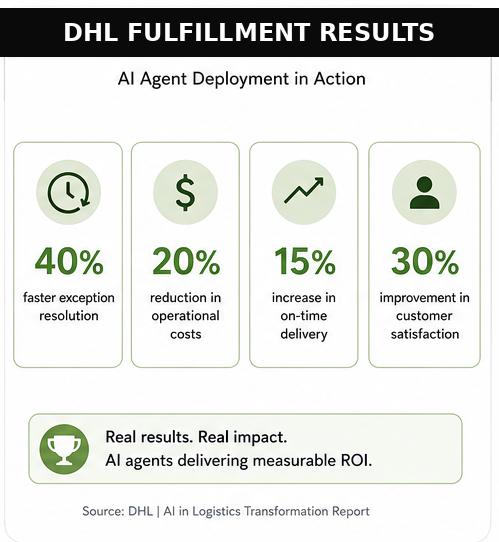
DHL's deployment of agentic systems in fulfillment operations cited a 20% reduction in cost per delivery and a 15-point improvement in on-time performance. Simultaneously, which historically has been a tradeoff, not a joint improvement.
Where Agents Fail (and Why It Matters for Deployment Strategy)
The failure modes are predictable. Understanding them is the difference between a successful deployment and an expensive proof-of-concept.
Failure Mode 1: Goal Misspecification
An agent optimizes exactly what you tell it to optimize. If you tell it to minimize inventory carrying cost, it will. And it will do so by cutting safety stock in ways that create stockouts in the next quarter. Practitioners who have navigated this successfully spend as much time on goal architecture as on model selection.
Failure Mode 2: Data Environment Assumptions
Agents trained in one operational environment often degrade in another. A demand-sensing agent built on North American retail data will make poor decisions if deployed in a market with different promotional cycles, channel structures, or supplier lead time distributions. The agent is not wrong. It is right about the world it was trained on.
Failure Mode 3: Human Override Collapse
This is underappreciated. When an agent performs well for 18 months, operators stop scrutinizing its decisions. They lose the operational familiarity that allows them to catch edge-case failures. When a genuine anomaly appears, the human override capability has atrophied. Maintaining meaningful human oversight is an organizational discipline problem, not a technology problem.
The Investment Signal Hidden in Adoption Data
Enterprise adoption of agentic AI in supply chain is following a non-linear curve, and the inflection point is closer than most analyst reports suggest.
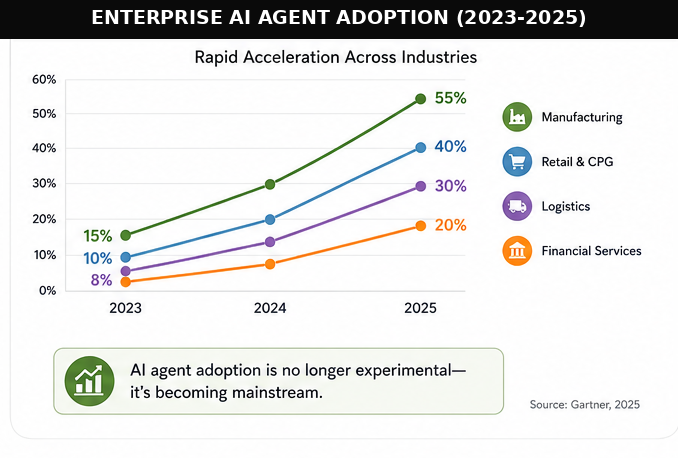
According to Gartner's 2025 Supply Chain Technology Survey, 31% of enterprise supply chain organizations have at least one AI agent in production deployment, up from 9% in 2023. The jump is not incremental. It reflects a threshold being crossed in model reliability and integration tooling that makes production deployment viable for organizations without hyperscaler-level engineering resources.
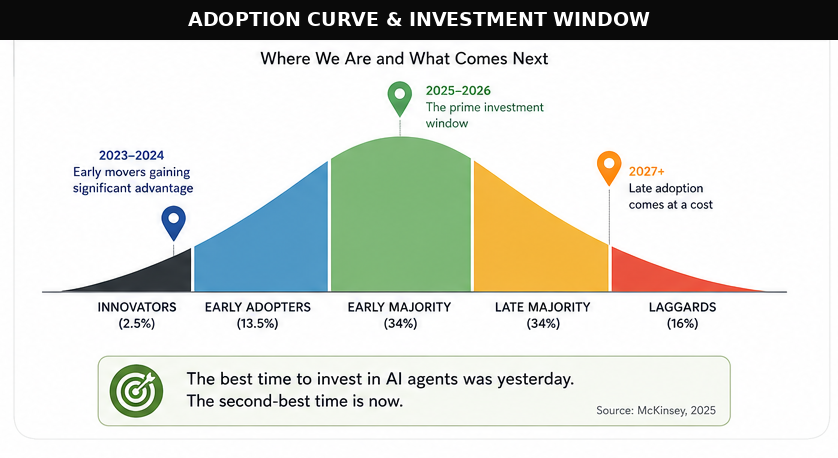
The companies in the early majority cohort (those between the 10th and 30th percentile in adoption timing) historically capture the durable competitive advantages in technology transitions like this one. The late majority (after 50% adoption) are catching up to a parity floor, not building moats.
For investors: look at the enterprise software vendors building orchestration layers specifically for supply chain agents, not general-purpose AI platforms retrofitting supply chain use cases. The integration depth required (connecting ERP, WMS, TMS, and supplier portals in a way that agents can act across) is a genuine technical barrier that creates defensible positioning.
What Practitioners Are Actually Doing Right Now
Based on operator conversations across logistics, retail, and manufacturing, the highest-traction deployment pattern in 2025 is not end-to-end agentic transformation. It is targeted agent deployment at high-variance decision nodes.
The question practitioners are asking is: where does decision latency cost us the most? Where does the combination of signal volume and decision frequency exceed what a human team can reliably handle?
Those are the deployment targets. The rest of the supply chain gets better visibility tooling, better forecasting, better analytics. But not autonomous agents, yet.
This is the right approach. Agentic AI requires trust calibration over time. You build that trust at the margin, not by handing over the entire operation.
The Bottom Line
AI agents in supply chains are not a future state. They are a current reality with a measurable adoption curve, documented failure modes, and a clear ROI pattern for operators who deploy them correctly.
The distinction that matters (for operators, for investors, and for anyone tracking this space) is between visibility improvements and action authority. Most of what gets called "AI in supply chain" is still the former. Agents are the latter. And the gap between those two categories, in terms of competitive impact, is larger than most market analyses reflect.
The companies that understand this distinction today, and act on it, are not just running more efficient supply chains. They are building operational moats that compound over time.
That is the signal worth following.
Frequently Asked Questions
What is the difference between an AI agent and regular AI in supply chain management?
Regular AI in supply chains are predictive models that surface insights and flag anomalies, but humans must decide what to do. AI agents are goal-directed, autonomous systems that make decisions like placing orders and rerouting shipments without human approval for each step, while continuously self-correcting based on outcomes.
How much do supply chain disruptions cost the global economy?
Supply chain disruptions cost the global economy an estimated $950 billion annually, making them a significant economic burden that has persisted despite traditional automation solutions like dashboards and spreadsheets.
What measurable results have AI demand-sensing agents achieved?
A major fashion retailer reduced forecast error by 23% within one quarter using an AI demand-sensing agent that processed social trend data, returns velocity, and regional weather patterns simultaneously, updating recommendations every four hours rather than on weekly or monthly cycles.
How many suppliers do typical enterprises need to monitor?
The average enterprise has 1,000 to 5,000 direct suppliers, but most companies can only realistically monitor their top 50 without AI agents, leaving the majority unmonitored for financial health, geopolitical exposure, and other risk factors.
What systems do AI supply chain agents integrate with?
AI supply chain agents orchestrate across multiple systems simultaneously, including ERP, TMS (Transportation Management Systems), WMS (Warehouse Management Systems), and supplier portals to execute coordinated decisions.
What is the fastest timeline for ROI with demand-sensing agents?
Demand-sensing agents are the lowest-disruption entry point into AI agent deployment, with measurable ROI typically achieved within 60 to 90 days due to clean data environments and moderate decision stakes.
Pritesh is a tech enthusiast decoding AI, big data, cloud, and software development trends. He simplifies the tech jargon through engaging writing, making concepts relatable to everyone.