
AI will make studying much more efficient. And a hell.
When you think about it for only a minute, it will strike you how pathetic our educational system is. How 19th century organized it is. And therefore, how very unfit for the 21st one. A teacher stands in front of a class of students. When the students are lucky and the teacher is capable and motivated, which is often the case, he (or she, of course) has prepared a lesson as best he can with all the devotion and professional passion that resides in him. Only to discover that a substantial amount of the students prefer to update their Facebook account, check their WhatsApp messages or share a hilarious Snapchat — sometimes secretly, sometimes plainly in the open. It hurt his feelings — the more so when he is passionate about the lesson’s contents. The results are tragic: a disillusioned teacher and a distracted class that apparently does not get what it wants and needs. This 19th century model of teaching has endured for too long. Students have changed. When working on a project, they know exactly where to find relevant tools and information on the internet. Any teacher who is still performing one-way communication in front of them, however passionately conducted, is missing the point. The class will only give attention when the teacher really tunes into what they need to know –right now, right there. If not, capricious Facebook etcetera are the better option. (There is a reason why millennials are characterized as Generation Instantaneous!) Of course, schools and universities can fight back by closing off Wi-Fi in class. Which is, even more, a return to the 19th-century situation, neglecting the empowering potential that the internet can also bring to class. Is sticking to the 19th century really the best solution for acquiring success in our current time? And simply ask: What do you want to know? [caption id="attachment_14290" align="aligncenter" width="500"]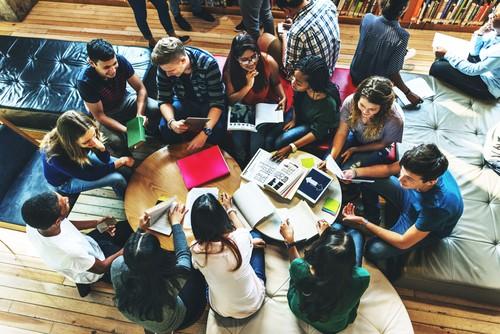 Vevox[/caption]
I am sure many teachers and professors recognize the situation sketched above. How to parry it? I asked this question to one of the leading educational innovators at my Fontys Universities in the Netherlands: Eric Slaats. His answer was loud and clear. “Carl, you have lots of experience as a future forecaster. You have taught masterclasses at 52 universities on four continents. You were awarded a professorship Future Forecasting and Innovation by the municipality of Shanghai in that most exciting city. Simply tell your students this. Further, inform them of the general topic of today’s class. And simply ask: What do you want to know?” I followed his advice: telling the students about my expertise and the topics for class today and taking it from there, which meant following their questions. In the beginning, I was ill at ease — could I answer the questions from my students? And my students were also ill at ease. They could not lay back anymore, passively waiting whether the teacher was cool enough and if his performance would surpass the niceties of social media. Now they were forced to reflect on what they wanted to know. It turned out that they too found it quite hard to leave the 19th century. But we managed and now my evaluation scores are rising. Students get what they need and really want to know. And I as a teacher get more in touch with their needs, interests, and passions. It is a win-win situation. Welcome to the 21st century.
This is why skill-based education has become such a buzzword.
Vevox[/caption]
I am sure many teachers and professors recognize the situation sketched above. How to parry it? I asked this question to one of the leading educational innovators at my Fontys Universities in the Netherlands: Eric Slaats. His answer was loud and clear. “Carl, you have lots of experience as a future forecaster. You have taught masterclasses at 52 universities on four continents. You were awarded a professorship Future Forecasting and Innovation by the municipality of Shanghai in that most exciting city. Simply tell your students this. Further, inform them of the general topic of today’s class. And simply ask: What do you want to know?” I followed his advice: telling the students about my expertise and the topics for class today and taking it from there, which meant following their questions. In the beginning, I was ill at ease — could I answer the questions from my students? And my students were also ill at ease. They could not lay back anymore, passively waiting whether the teacher was cool enough and if his performance would surpass the niceties of social media. Now they were forced to reflect on what they wanted to know. It turned out that they too found it quite hard to leave the 19th century. But we managed and now my evaluation scores are rising. Students get what they need and really want to know. And I as a teacher get more in touch with their needs, interests, and passions. It is a win-win situation. Welcome to the 21st century.
This is why skill-based education has become such a buzzword.
The changing role of the teacher
[caption id="attachment_14291" align="aligncenter" width="800"]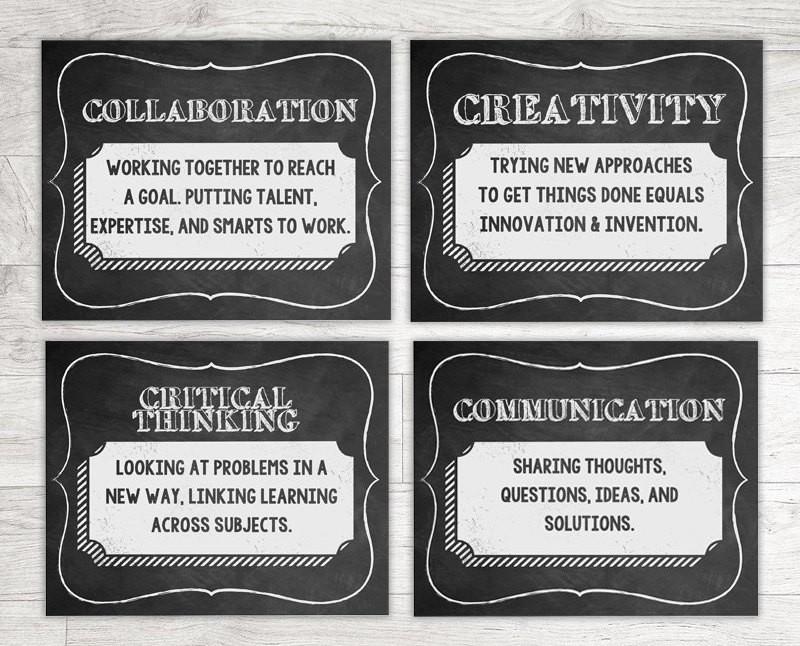 etsy.com[/caption]
My solution for transforming an inadequate 19th century educational setting of one-way communication into a more appealing and interactive 21st-century one doesn’t stand on its own. After all, the outdated character of traditional education is recognized all around. In our fast and liquid society, knowledge institutes have to prepare students for future jobs that might not even exist today. As a consequence, what knowledge these students need, is a challenge to predict. It is somewhat easier to focus less on the actual knowledge and more on the skills they will need for a successful career in the 21st century, which are easier to predict. This is why skill-based education has become such a buzzword. Education on my own Fontys University in the Netherlands revolves around the four C skills that have been determined as essential for the 21st century: Creativity, Communication, Collaboration, and Critical Thinking. It is obvious that you can’t practice these skills within the 19th century ‘one-way communication’ frame. Another buzzword used at our university, as in so many others, is Challenge-Based Learning. Challenge-Based Learning is based on real challenges students encounter in their social lives and future professional ones — and that they want to solve. It is a more practical, more hands-on and more collaborative approach to education: fully 21st century.
[caption id="attachment_14292" align="aligncenter" width="1068"]
etsy.com[/caption]
My solution for transforming an inadequate 19th century educational setting of one-way communication into a more appealing and interactive 21st-century one doesn’t stand on its own. After all, the outdated character of traditional education is recognized all around. In our fast and liquid society, knowledge institutes have to prepare students for future jobs that might not even exist today. As a consequence, what knowledge these students need, is a challenge to predict. It is somewhat easier to focus less on the actual knowledge and more on the skills they will need for a successful career in the 21st century, which are easier to predict. This is why skill-based education has become such a buzzword. Education on my own Fontys University in the Netherlands revolves around the four C skills that have been determined as essential for the 21st century: Creativity, Communication, Collaboration, and Critical Thinking. It is obvious that you can’t practice these skills within the 19th century ‘one-way communication’ frame. Another buzzword used at our university, as in so many others, is Challenge-Based Learning. Challenge-Based Learning is based on real challenges students encounter in their social lives and future professional ones — and that they want to solve. It is a more practical, more hands-on and more collaborative approach to education: fully 21st century.
[caption id="attachment_14292" align="aligncenter" width="1068"] Educational Technology[/caption]
When we go fully 21st century, what role will, can or should there be for AI? We will see how MOOCs (massive open online courses) are liberating education. And how AI plays a role in this. We will also explore the next step: meticulous surveillance education. Here the role of AI deepens, up to the point where we might no longer feel comfortable with it. Actually, we can get so uncomfortable with it, that at some surprising places, education will go mainly offline again.
Educational Technology[/caption]
When we go fully 21st century, what role will, can or should there be for AI? We will see how MOOCs (massive open online courses) are liberating education. And how AI plays a role in this. We will also explore the next step: meticulous surveillance education. Here the role of AI deepens, up to the point where we might no longer feel comfortable with it. Actually, we can get so uncomfortable with it, that at some surprising places, education will go mainly offline again.
MOOCs have grown up
Probably the first MOOC on Artificial Intelligence was from Stanford University in the USA, Silicon Valley. It started in the autumn of 2011 and was attended by 160.000 students, of which 14% finished the course. A new educational format was born. Its coolness was celebrated worldwide, mainly at Silicon Valley. The advantages of MOOCs are obvious:- Many more students can take courses that would fit in classes.
- Several of the most successful MOOCs are disseminated by top international universities. Next, to Stanford University, Harvard Business School has exciting offerings. In less than a decade, MOOCs have become so popular that the best course providers have become brand names on their own: Coursera (37 million students), EdX (18 million), XuetangX (14 million), Udacity (10 million). Figures from December 2018.
- MOOCs are cheap compared to offline education. Which explains their popularity among aspiring students in emerging countries. Though MOOCs are relatively cheap, the business model nevertheless works because many more students can join the online course. A good MOOC can also boost the brand reputation of providing university.
- MOOCs offer flexibility and personalization that is impossible in classrooms. Each participant can follow his/her own educational time path, taking breaks at his/her own discretion. Not only within one lesson but also between them. Traditional ‘one size fits all’ is over.
- We can learn a lot from joining MOOCs, but the MOOCs also learn from following us. They receive a huge amount of data about how people study, when, where, in what time slots, with what frequencies, etc. They also learn how to motivate different types of students. They even learn how to predict future motivational dips — and how to counter them. AI is the perfect tool to make sense of the avalanches of data points that we generate while following a MOOC. MOOCs are born online. Therefore their methods to learn from students are also born online: AI algorithms and coding are leading the way.
 National Communication Association[/caption]
Online teaching is eminently solitary. It makes studying extra hard. The best MOOCs are therefore intensely and extensively improving the interaction caliber of the course. When students are asked afterward what they appreciated most about their online course, they often mention the online group experiences. People flourish when they communicate. MOOCs must take this universal insight to heart. AI-generated insights can help to soften the problem of solitariness, to live up to the challenge. They teach the MOOC provider ever better what kinds of students really need an interactive moment, at what point of time, and with what kind of approach. Must the teacher interfere? Can a co-student be helpful enough? Or does it require participation in a collaborating group? Yes, MOOCs solitude can be demotivating. But AI’s algorithms are starting to know how to overcome this, for each individual in his or her own unique way.
Last but not least, there is another disadvantage of MOOCs. Yes, their AI approach to learning allows for adaptation to our specific learning styles with a personalized accuracy that goes way beyond what is possible in a traditional class. But when we take it one step further, this powerful advantage can become an intrusion into our private lives. MOOCs are monitoring us in mysterious ways that we cannot control. In that sense, MOOCs are becoming part of a surveillance culture that can feel uncomfortable, or even creepy. To illustrate this point, let’s move on to what might become the next step in education: AI-led surveillance education.
National Communication Association[/caption]
Online teaching is eminently solitary. It makes studying extra hard. The best MOOCs are therefore intensely and extensively improving the interaction caliber of the course. When students are asked afterward what they appreciated most about their online course, they often mention the online group experiences. People flourish when they communicate. MOOCs must take this universal insight to heart. AI-generated insights can help to soften the problem of solitariness, to live up to the challenge. They teach the MOOC provider ever better what kinds of students really need an interactive moment, at what point of time, and with what kind of approach. Must the teacher interfere? Can a co-student be helpful enough? Or does it require participation in a collaborating group? Yes, MOOCs solitude can be demotivating. But AI’s algorithms are starting to know how to overcome this, for each individual in his or her own unique way.
Last but not least, there is another disadvantage of MOOCs. Yes, their AI approach to learning allows for adaptation to our specific learning styles with a personalized accuracy that goes way beyond what is possible in a traditional class. But when we take it one step further, this powerful advantage can become an intrusion into our private lives. MOOCs are monitoring us in mysterious ways that we cannot control. In that sense, MOOCs are becoming part of a surveillance culture that can feel uncomfortable, or even creepy. To illustrate this point, let’s move on to what might become the next step in education: AI-led surveillance education.
AI-led surveillance education
“A week after students begin their distance learning courses at the UK’s Open University … a computer program will have predicted their final grade. An algorithm monitoring how much new recruits have read of their online textbooks, and how keenly they have engaged with the web learning forums, will cross-reference this information against data on each person’s socio-economic background. It will identify those likely to founder and pinpoint where they will start struggling.” This is the opening sentence of a Financial Times article on the future, or at least, one of the futures, of education. It vividly illustrates the power of AI, which can empower us to study more efficiently and effectively, but also how intensely monitoring it is becoming — and how creepy this can feel. Expect apps abound that monitor how long students are studying, socializing, exercising and sleeping — and where exactly. They will help to improve performances, for sure. They might also be combined with data on our financial situation and our lending behavior. All these data points will be analyzed by AI in order to nudge us over motivational learning dips and crises. It will work. Based on all these data points, tutors get precise information about the drop-out risks of each particular student at each possible moment. Tutors in this AI-led surveillance educational environment can follow exactly what students read, in what tempo and with what concentration. AI-led monitoring will even be able to distinguish whether the student behind the screen is breathing quietly because she is very concentrated or because she has fallen asleep. [caption id="attachment_14294" align="aligncenter" width="512"]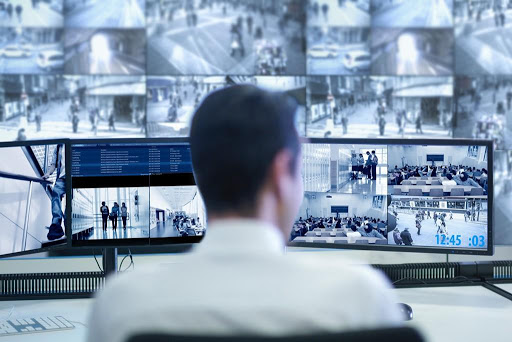 Genetec[/caption]
Parents have a tendency to appreciate the advantages of AI-led surveillance education. After all, studying a child costs a lot. Students themselves are more ambiguous. And shouldn’t we all be? What will be left of the romanticized pre-AI freedom of student life? Don’t we all intuitively feel that real learning can’t blossom without a certain amount of freedom? And isn’t the tight monitoring control of AI-led surveillance education killing that freedom? Doesn’t it result in the ultimate ‘monetization’ of human life and learning? Are the next generation students not becoming cyborg-like machines, performing better than former generations but mysteriously losing some of their humanity? And this all on a ‘voluntary’ basis? Because when the neighbor’s kids enter AI-led surveillance education, making them better performers, how wise is it to put your own kids behind? On the other hand, as Alex Beard reflects in his book ‘Natural-born Learners’, isn’t AI-led surveillance education, in spite of all its personalization and flexibility, churning out “mass-produced, unthinking, high-performance drones that ace tests but lack the social and emotional skills to really succeed in the world”?
Genetec[/caption]
Parents have a tendency to appreciate the advantages of AI-led surveillance education. After all, studying a child costs a lot. Students themselves are more ambiguous. And shouldn’t we all be? What will be left of the romanticized pre-AI freedom of student life? Don’t we all intuitively feel that real learning can’t blossom without a certain amount of freedom? And isn’t the tight monitoring control of AI-led surveillance education killing that freedom? Doesn’t it result in the ultimate ‘monetization’ of human life and learning? Are the next generation students not becoming cyborg-like machines, performing better than former generations but mysteriously losing some of their humanity? And this all on a ‘voluntary’ basis? Because when the neighbor’s kids enter AI-led surveillance education, making them better performers, how wise is it to put your own kids behind? On the other hand, as Alex Beard reflects in his book ‘Natural-born Learners’, isn’t AI-led surveillance education, in spite of all its personalization and flexibility, churning out “mass-produced, unthinking, high-performance drones that ace tests but lack the social and emotional skills to really succeed in the world”?
A counter-movement in the making
[caption id="attachment_14295" align="aligncenter" width="1120"] Agriturismo Club Le Cannelle[/caption]
These questions are both philosophical and disturbing. As a consequence, a movement is on the rise that wants to counterbalance too much tech dependency in our education — and in our lives for that matter. Digital detox is a new buzzword in many places. Those who practice it, including many students of my own Fontys University, mainly discover how addicted they are. (How difficult it is to have your digital detox day, and not telling it on social media!) When it comes to forms of tech-free/low-tech education, there is one place that surprisingly leads the way: Silicon Valley! The tech families who work in the corporates that transform the rest of us into tech-addicts send their kids increasingly to Waldorf schools where access to technology is substantially hampered (until the age of 13, 14) and where learning is done through play, doing and community. At the family dinner table, Steve Jobs was a tech-refusenik: mobiles forbidden. Something alike goes for the kids of Bill and Melinda Gates: low-tech education.
Apparently, the leaders of the tech-revolution are deciding that too much tech in education, including AI-programmed learning, can be harmful. When AI-surveillance enters education, it might distract us from acquiring the four C-skills that will determine success in the 21st century: Creativity, Communication, Collaboration, and Critical Reflection. These are deeply human key abilities.
They should be empowered by AI. Not overridden.
Agriturismo Club Le Cannelle[/caption]
These questions are both philosophical and disturbing. As a consequence, a movement is on the rise that wants to counterbalance too much tech dependency in our education — and in our lives for that matter. Digital detox is a new buzzword in many places. Those who practice it, including many students of my own Fontys University, mainly discover how addicted they are. (How difficult it is to have your digital detox day, and not telling it on social media!) When it comes to forms of tech-free/low-tech education, there is one place that surprisingly leads the way: Silicon Valley! The tech families who work in the corporates that transform the rest of us into tech-addicts send their kids increasingly to Waldorf schools where access to technology is substantially hampered (until the age of 13, 14) and where learning is done through play, doing and community. At the family dinner table, Steve Jobs was a tech-refusenik: mobiles forbidden. Something alike goes for the kids of Bill and Melinda Gates: low-tech education.
Apparently, the leaders of the tech-revolution are deciding that too much tech in education, including AI-programmed learning, can be harmful. When AI-surveillance enters education, it might distract us from acquiring the four C-skills that will determine success in the 21st century: Creativity, Communication, Collaboration, and Critical Reflection. These are deeply human key abilities.
They should be empowered by AI. Not overridden.

Prof. Dr. Carl Rohde writes for DDI on the New Tech Forces and their cultural-sociological impact and meaning for contemporary and future culture and society. During the last ten years Rohde occupied professorate chairs in ‘Future Forecasting & Innovation’ in Shanghai, Barcelona and the Netherlands. Rohde also leads scienceofthetime.com a virtual network of trend spotters and market researchers worldwide.