
 There is a third option, one that first the new reality in front of us as we march head-on into the 4th Industrial Revolution. We have the opportunity to put rules in place that puts human wellbeing front and center in our society by changing how we see the economy at a fundamental level. We need to learn a bit from all the past theories and how they worked out, to develop a brand-new way of divesting the planet’s resources and divvy out the returns on generations of investment in figuring out how economies succeed or fail for the Earth’s population. Artificial intelligence, robotics and our understanding of the physical world should serve humanity. We are standing on the shoulders of our forefathers. We learned. Now we need to break free of the mold and reinvent our society for the better.
A Human-Centric Economy
The reason we have an economy in the first place is because we need to consume goods. That’s our demand as people. To consume, we need to produce and manage resources (the economy). A long time ago, it was hard to extract natural resources and took lots of energy and time to convert these into usable goods. We used our intelligence and physical power to produce and manage production so we could consume. We figured out a way to redistribute the produced goods to our population-based on merit. In this case, money was used to compensate each adult based on their participation in the economy. In a few years, automation will be responsible for all of our productivity. The amount of work done through automation will only increase in time. McKinsey Global Institute released a study in 2017 showing that over 50% of all paid tasks can be automated using today’s technology. This should be good news! We’ve done it, everybody! Soon, we’ll no longer need to take part in the production and management aspects of the cycle. We can soon just focus on what we really wanted in the first place: to consume. But no. We’ve been in the system so long that we forgot why we were working. No one wants to work for a living. We just want the living part. We should adapt how we see the economy based on what we’ve learned so far:
- Free markets work great if there is a central body to make sure these markets favor those the markets are there to serve: the people.
- No one likes to work but we need to consume what we’re producing. Gallup says about 70% of Americans are not engaged by their work. Newsflash: they would rather do something else!
- The robot tax: if a robot replaces you at work, we tax the robot so that the government still receives revenues to pay for its programs. This doesn’t resolve the job issue and B. what qualifies as a robot? Does my AI-enabled smartphone qualify? How about Google Home, my smart refrigerator and so on? How can we tax those? and C. are we trying to stay in the last century or are we thinking about what we really need here?
- The job guarantee: at least there is an effort to keep people earning income to pay for goods with this one. However, as stated before, we don’t want to work, and automated systems can do better jobs than us already. Having people work in a way that will reduce our average productivity is counterproductive, increases costs of living and is anti-progress too. Plus, we know from experience that creating government jobs we don’t need just to make a population work doesn’t work. We have tried it… many times in many countries. It is still a bad idea.
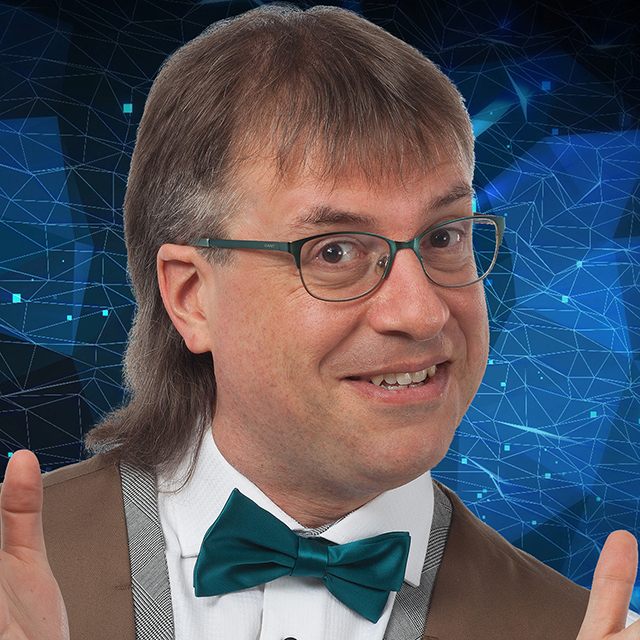
Sylvain is an international keynote speaker, futurist, entrepreneur and author of the non-fiction book "Engineering Paradise: Are You Ready?". As an entrepreneur, he supports and runs entertainment technology, digital media and international infrastructure funding businesses with multiple partners from around the world. He has a bachelors degree in biochemistry, chemical engineering and education from the University of Ottawa, Canada, has taught from high school to university for over 20 years and has been public speaking for over 12 years. In addition, he currently is a delegate of the World Future Society, a principle at the Canadian Institute of Mass Communication and is a Certified Master Entrepreneur Facilitator & Coach. His passion is now writing and speaking about how artificial intelligence will completely change our society and our economy through articles, other publications and other media formats like video and podcasts.