5 Unexpected Payment Trends That Could Take 2025 by Storm
Dmytro Spilka·4 min


 Jamie Dimon — Business Insider[/caption]
But now, in the last few years, fintech is making an appearance — and an inviting impression. “They all want to eat our lunch”, Jamie Dimon says, CEO of America’s biggest bank J.P. Morgan, who in truth is not likely to go hungry any time soon — in 2019 was awarded a $31 million dollar pay rise. With an alternative for banking services on the rise, significant avantgarde is jumping on the fintech bandwagon. Expect more fintech startups to enter the arena.
Many of them don’t aspire to become traditional banks. They steer clear of the loveless image of the traditional bank. Often fintech startups focus on ripping-off some of a bank’s most lucrative services. Like wealth management (robo advisors), payments (M-Pesa but also Alipay and Applepay), peer to peer lending (Zopa, Lending Club), or crowdfunding, which is more of a new financial service. All deliver at lower prices than the traditional banks. Together it gives fintech a Robin Hood appeal. When fintech takes on the banks, many appreciate it as cherry-picking funtech — unless you earn $31 million, of course.
Some time ago Estonian Taavet Hinrikus moved to London, to work for Skype. There he got paid in UK Sterling. When he wanted to transfer money to Estonia — in the country’s currency — he had to pay an eye-watering 5% transfer fee. That’s how monopoly banks behave. Fortunately, other people wanted to transfer money in the opposite direction, also hated the unreasonable transfer fees. Now they meet on peer-to-peer Transferwise.com where transmission costs are much lower and where everybody is happy to eat some of Jamie Dimon’s lunch.
The rise of fintech enhances the vitality and the competition fervor of the whole financial industry. Fintech disruptors manage to cut costs, as their overheads are lower and their information and communications technology (ICT) are superior to regular banks. Fintech is also less burdened (for now!) by governmental regulations. Regulations that have become more severe for regular banks as a result of their recent misbehaviors. In addition to fintech being capable of reducing costs for its services, it is also able to assess risks better than old skool banking when lending to someone — thanks to their more sophisticated ICT and AI systems.
[caption id="attachment_13246" align="aligncenter" width="352"]
Jamie Dimon — Business Insider[/caption]
But now, in the last few years, fintech is making an appearance — and an inviting impression. “They all want to eat our lunch”, Jamie Dimon says, CEO of America’s biggest bank J.P. Morgan, who in truth is not likely to go hungry any time soon — in 2019 was awarded a $31 million dollar pay rise. With an alternative for banking services on the rise, significant avantgarde is jumping on the fintech bandwagon. Expect more fintech startups to enter the arena.
Many of them don’t aspire to become traditional banks. They steer clear of the loveless image of the traditional bank. Often fintech startups focus on ripping-off some of a bank’s most lucrative services. Like wealth management (robo advisors), payments (M-Pesa but also Alipay and Applepay), peer to peer lending (Zopa, Lending Club), or crowdfunding, which is more of a new financial service. All deliver at lower prices than the traditional banks. Together it gives fintech a Robin Hood appeal. When fintech takes on the banks, many appreciate it as cherry-picking funtech — unless you earn $31 million, of course.
Some time ago Estonian Taavet Hinrikus moved to London, to work for Skype. There he got paid in UK Sterling. When he wanted to transfer money to Estonia — in the country’s currency — he had to pay an eye-watering 5% transfer fee. That’s how monopoly banks behave. Fortunately, other people wanted to transfer money in the opposite direction, also hated the unreasonable transfer fees. Now they meet on peer-to-peer Transferwise.com where transmission costs are much lower and where everybody is happy to eat some of Jamie Dimon’s lunch.
The rise of fintech enhances the vitality and the competition fervor of the whole financial industry. Fintech disruptors manage to cut costs, as their overheads are lower and their information and communications technology (ICT) are superior to regular banks. Fintech is also less burdened (for now!) by governmental regulations. Regulations that have become more severe for regular banks as a result of their recent misbehaviors. In addition to fintech being capable of reducing costs for its services, it is also able to assess risks better than old skool banking when lending to someone — thanks to their more sophisticated ICT and AI systems.
[caption id="attachment_13246" align="aligncenter" width="352"] Kreditech[/caption]
Take Kreditech. This German online lender offers loans to individuals, based on their creditworthiness which is analyzed not so much by using traditional credit information like income and age and, if possible, former lending behavior, but by using social media data. As soon as you enter the website and express the intention to lend, you are asked to share your browsing history. This way Kreditech can make a proposal based on your actual spending behavior, on the type of friends you have, on the frequency you visit bars at night — or gambling sites. Algorithms and AI are in the lead here — claiming to deliver a more accurate picture of someone’s creditworthiness than the often ancient systems of traditional banks are capable of. Kreditech even registers whether you copy-and-paste your name when you register for a loan and whether you immediately head for registering instead of first reading the website’s general information. Both are indication of a sense of urgency that doesn’t make you a very reliable borrower. Fintech simply knows us deeper and better. As a result, it delivers smarter services, smoother and more cheaply.
But right now, hardly anyone manages to see traditional banks as the new underdog.
[caption id="attachment_13247" align="aligncenter" width="498"]
Kreditech[/caption]
Take Kreditech. This German online lender offers loans to individuals, based on their creditworthiness which is analyzed not so much by using traditional credit information like income and age and, if possible, former lending behavior, but by using social media data. As soon as you enter the website and express the intention to lend, you are asked to share your browsing history. This way Kreditech can make a proposal based on your actual spending behavior, on the type of friends you have, on the frequency you visit bars at night — or gambling sites. Algorithms and AI are in the lead here — claiming to deliver a more accurate picture of someone’s creditworthiness than the often ancient systems of traditional banks are capable of. Kreditech even registers whether you copy-and-paste your name when you register for a loan and whether you immediately head for registering instead of first reading the website’s general information. Both are indication of a sense of urgency that doesn’t make you a very reliable borrower. Fintech simply knows us deeper and better. As a result, it delivers smarter services, smoother and more cheaply.
But right now, hardly anyone manages to see traditional banks as the new underdog.
[caption id="attachment_13247" align="aligncenter" width="498"] Tenor[/caption]
Big Brother versus Robin Hood versus Big Brother
Traditional banks are fighting back. But it is an uphill battle. Due to their irrevocably damaged reputations. Due to their vintage ICT systems. Due also to the fact that the brightest Millennials now often prefer working at an exciting fintech startup instead of the once favored traditional banks. The banks perceive some unfairness in all this. Ana Botin, CEO of Santander Banking Group, claims that these days Big Tech is the ultimate challenger of the traditional banking world and that Big Tech has much more cash and less regulation than the banks have. So Big Tech is the real enemy, not those poor banks. Botin has a point when it comes to the power of Big Tech. But right now, hardly anyone manages to see traditional banks as the new underdog. Their recent behavior has hurt too many. It is too fresh in our collective memory for us to abandon our Schadenfreude.
Nevertheless, the banks are making moves. Traditional mammoth ING Bank, for instance, tries to transform its DNA in the direction of fintech. It now works with an algorithmic automated credit scoring system mimicking Kreditech. In Germany, it received regulator’s permission allowing clients to open an account purely by an internet video link with face recognition. Vice versa, fintech is getting less Cool than only a few years ago. Their algorithmic AI approach to assess our creditworthiness by harvesting our clicks in general and social media data, in particular, runs counter to the Western sense of privacy. Fintech becomes less Robin Hood and more Big Brother.
It is an undecided but increasingly contested battlefield. Where now Facebook’s Libra is digging trenches of its own.
Libra on Its way
[caption id="attachment_13248" align="aligncenter" width="800"]
Tenor[/caption]
Big Brother versus Robin Hood versus Big Brother
Traditional banks are fighting back. But it is an uphill battle. Due to their irrevocably damaged reputations. Due to their vintage ICT systems. Due also to the fact that the brightest Millennials now often prefer working at an exciting fintech startup instead of the once favored traditional banks. The banks perceive some unfairness in all this. Ana Botin, CEO of Santander Banking Group, claims that these days Big Tech is the ultimate challenger of the traditional banking world and that Big Tech has much more cash and less regulation than the banks have. So Big Tech is the real enemy, not those poor banks. Botin has a point when it comes to the power of Big Tech. But right now, hardly anyone manages to see traditional banks as the new underdog. Their recent behavior has hurt too many. It is too fresh in our collective memory for us to abandon our Schadenfreude.
Nevertheless, the banks are making moves. Traditional mammoth ING Bank, for instance, tries to transform its DNA in the direction of fintech. It now works with an algorithmic automated credit scoring system mimicking Kreditech. In Germany, it received regulator’s permission allowing clients to open an account purely by an internet video link with face recognition. Vice versa, fintech is getting less Cool than only a few years ago. Their algorithmic AI approach to assess our creditworthiness by harvesting our clicks in general and social media data, in particular, runs counter to the Western sense of privacy. Fintech becomes less Robin Hood and more Big Brother.
It is an undecided but increasingly contested battlefield. Where now Facebook’s Libra is digging trenches of its own.
Libra on Its way
[caption id="attachment_13248" align="aligncenter" width="800"] Yahoo Finance[/caption]
Libra is the international digital currency coin plus accompanying smart paying system announced by Facebook and 27 partners. Certainly, at first sight, Libra looks great for users. Using it will be amazingly smooth, like all Facebook services. It will pay for your purchases, but also allow you to send money to your friends with the company’s messenger service. It will be cheap because there will be no middlemen between payer and receiver: the banks are mostly locked out and can’t charge anymore. In addition, Libra will be also well-equipped to bring cool new related services to its users — one of Big Tech’s proven powerful inclinations. For instance, your future driverless car will not only be able to assess the quickest route home for you but also whether it is worth paying some money to travel using the fast-express lane. Payment will be handled automatically. Over Libra, of course.
First of all, it cleverly plays the ‘blockchain’ card.
Libra will be user-friendly heaven. But it will be difficult for Facebook to appear as Robin Hood in the way some fintech startups managed to do. Instead, Libra tries two other image boosting strategies. First of all, it cleverly plays the ‘blockchain’ card. The negative thing about blockchain is that the bitcoins it supports often show chaotic currency oscillations. Facebook promises with Libra the first stable (bit) coin: stablecoin. The positive image thing about blockchains is that it is associated with the democratic grassroots excitement of peer to peer systems in charge. Libra suggests hitching that ride as well. Not completely, of course, but at least with Libra we will have the capacity to tame the disliked banks.
As a second image boosting strategy, Libra plays a socially responsible card. It claims to offer basic financial services to the poor on our planet, who until now couldn’t open an account at the nasty banks, because they were not lucrative enough customers for them. With Libra forthcoming, who can refuse to feel happy for the poor?
Nevertheless, the ‘Love Libra’ arguments don’t disguise the problems:
[caption id="attachment_13249" align="aligncenter" width="800"]
Yahoo Finance[/caption]
Libra is the international digital currency coin plus accompanying smart paying system announced by Facebook and 27 partners. Certainly, at first sight, Libra looks great for users. Using it will be amazingly smooth, like all Facebook services. It will pay for your purchases, but also allow you to send money to your friends with the company’s messenger service. It will be cheap because there will be no middlemen between payer and receiver: the banks are mostly locked out and can’t charge anymore. In addition, Libra will be also well-equipped to bring cool new related services to its users — one of Big Tech’s proven powerful inclinations. For instance, your future driverless car will not only be able to assess the quickest route home for you but also whether it is worth paying some money to travel using the fast-express lane. Payment will be handled automatically. Over Libra, of course.
First of all, it cleverly plays the ‘blockchain’ card.
Libra will be user-friendly heaven. But it will be difficult for Facebook to appear as Robin Hood in the way some fintech startups managed to do. Instead, Libra tries two other image boosting strategies. First of all, it cleverly plays the ‘blockchain’ card. The negative thing about blockchain is that the bitcoins it supports often show chaotic currency oscillations. Facebook promises with Libra the first stable (bit) coin: stablecoin. The positive image thing about blockchains is that it is associated with the democratic grassroots excitement of peer to peer systems in charge. Libra suggests hitching that ride as well. Not completely, of course, but at least with Libra we will have the capacity to tame the disliked banks.
As a second image boosting strategy, Libra plays a socially responsible card. It claims to offer basic financial services to the poor on our planet, who until now couldn’t open an account at the nasty banks, because they were not lucrative enough customers for them. With Libra forthcoming, who can refuse to feel happy for the poor?
Nevertheless, the ‘Love Libra’ arguments don’t disguise the problems:
[caption id="attachment_13249" align="aligncenter" width="800"]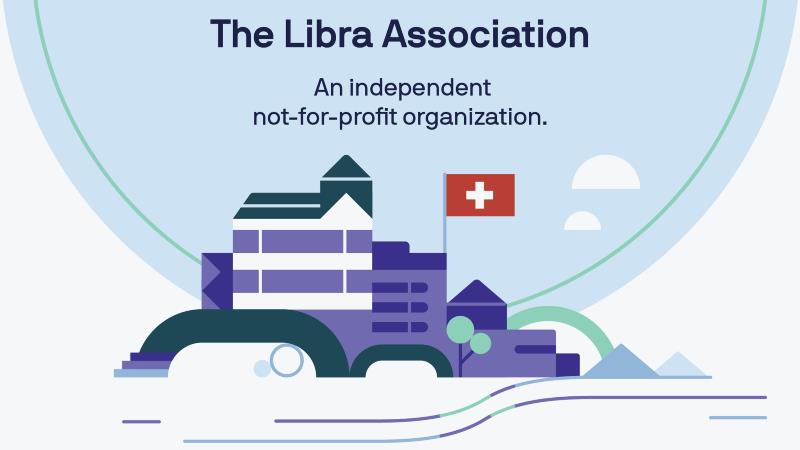 TechCrunch[/caption]
 The Verge[/caption]
Though everymen may act lackluster on the privacy theme, governments will not. Neither will the old skool banks. Governments won’t because they fear that the emergence of a super-powerful worldwide player like Libra, will diminish their opportunities for national economics politics. Nations often fight economic harsh time by devaluing their currencies. When half the world pays in Libra, this governmental tool will lose half of its power. Also, traditional banks will fight Libra. Several bank conglomerates are working already on their own digital coins — which gives them an extra reason to be skeptical towards Libra. For more than a century government and banks have been intimately in bed. Big Tech must be an utterly skilled seducer to break them up.
The battlefields are marked. The trenches are built. The die is cast.
The Verge[/caption]
Though everymen may act lackluster on the privacy theme, governments will not. Neither will the old skool banks. Governments won’t because they fear that the emergence of a super-powerful worldwide player like Libra, will diminish their opportunities for national economics politics. Nations often fight economic harsh time by devaluing their currencies. When half the world pays in Libra, this governmental tool will lose half of its power. Also, traditional banks will fight Libra. Several bank conglomerates are working already on their own digital coins — which gives them an extra reason to be skeptical towards Libra. For more than a century government and banks have been intimately in bed. Big Tech must be an utterly skilled seducer to break them up.
The battlefields are marked. The trenches are built. The die is cast.Prof. Dr. Carl Rohde writes for DDI on the New Tech Forces and their cultural-sociological impact and meaning for contemporary and future culture and society. During the last ten years Rohde occupied professorate chairs in ‘Future Forecasting & Innovation’ in Shanghai, Barcelona and the Netherlands. Rohde also leads scienceofthetime.com a virtual network of trend spotters and market researchers worldwide.